
From natural bamboo to the perfect curve: a close look inside our skis and their components. Our building choices, explained straight from Villard-de-Lans.
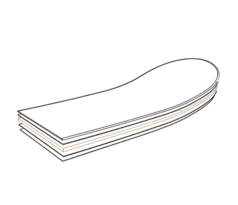
A ski is a sandwich: a core in the middle, reinforcing fibres above and below, a base and edges to glide and grip, and a topsheet to protect it all.
It is how these layers are put together, and in what proportions, that gives a ski its character.
Behind this apparent simplicity, each pair brings together some thirty different components, not counting the manufacturing steps.
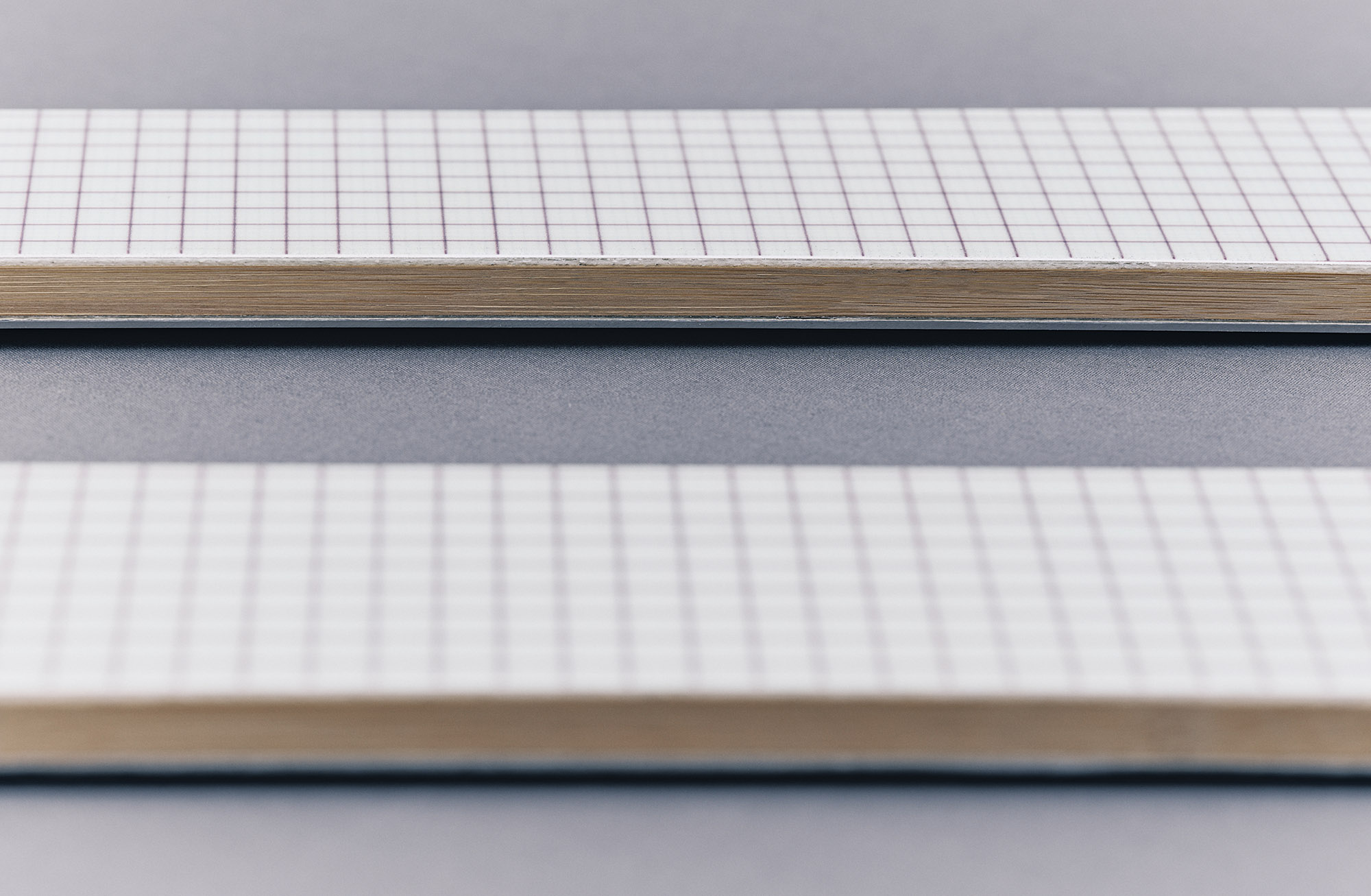
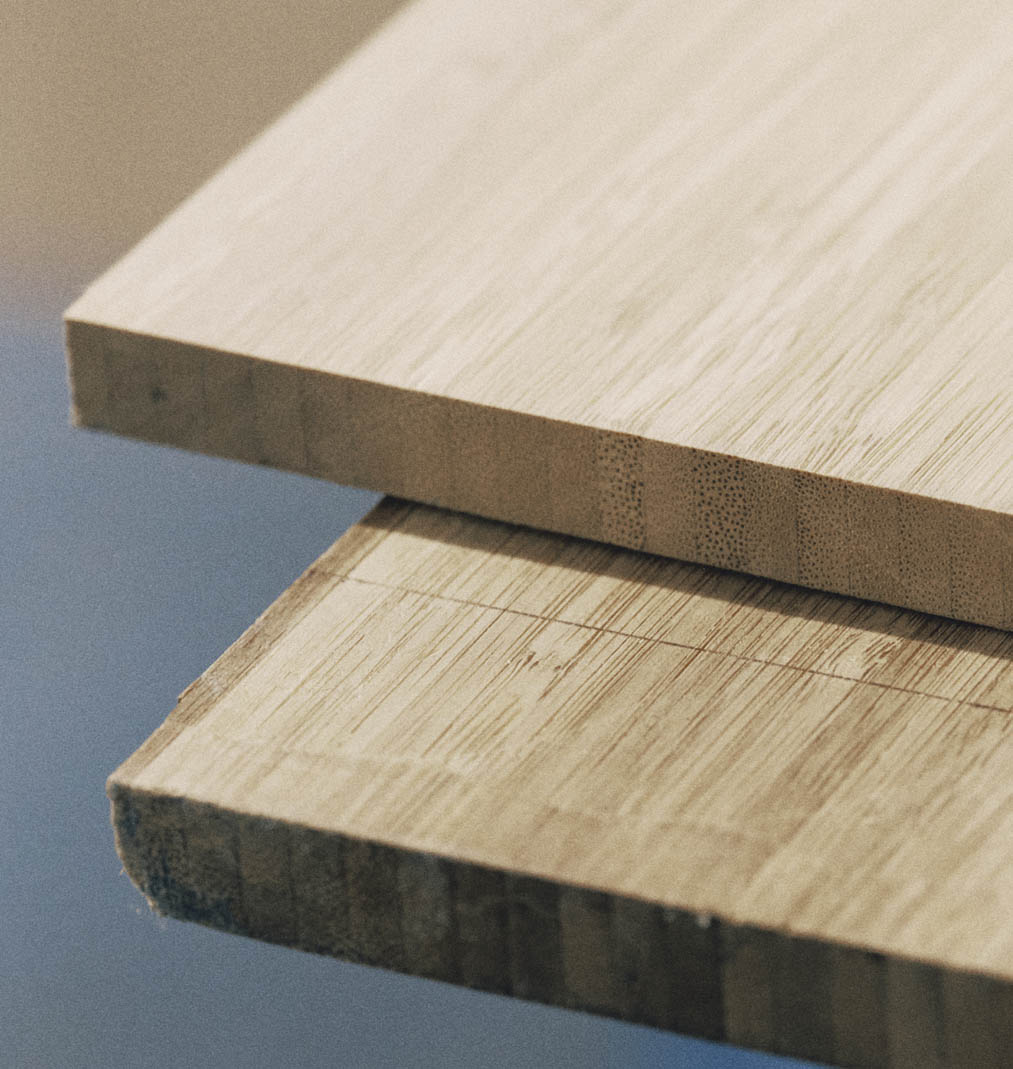
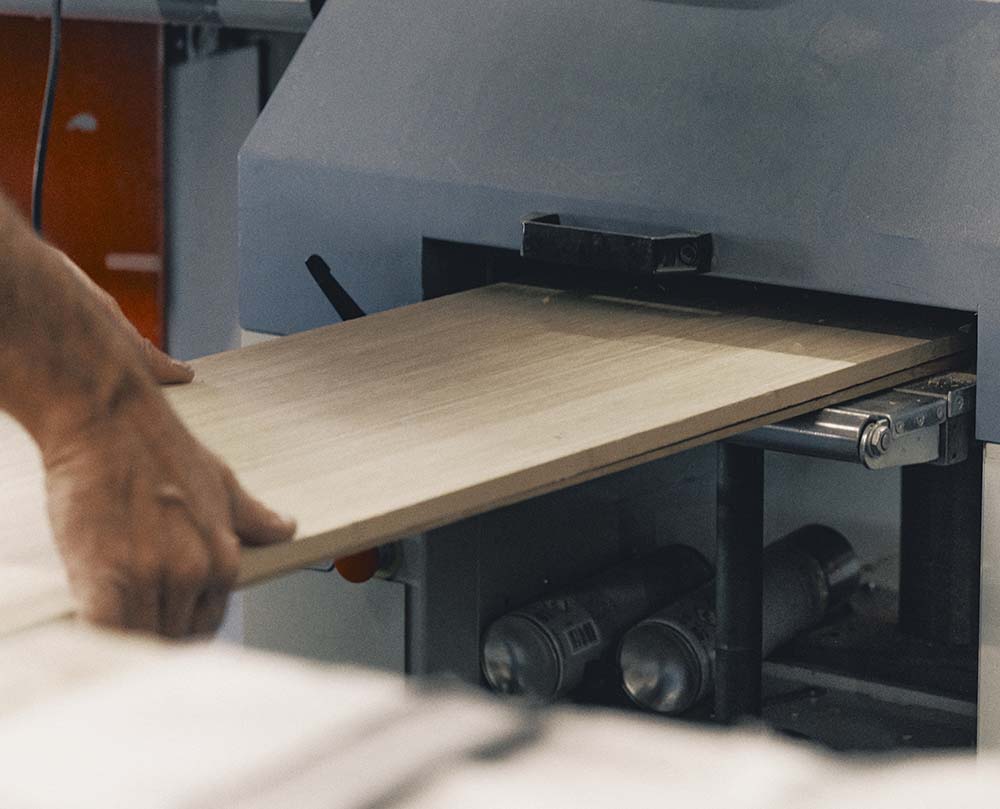
High-end skis usually use ash; poplar tends to go into entry-level models. We chose bamboo: mechanical properties identical to ash, and far better shock absorption. It filters vibrations: on hard, chattery or spring snow, the ski stays calm, and that means less fatigue.
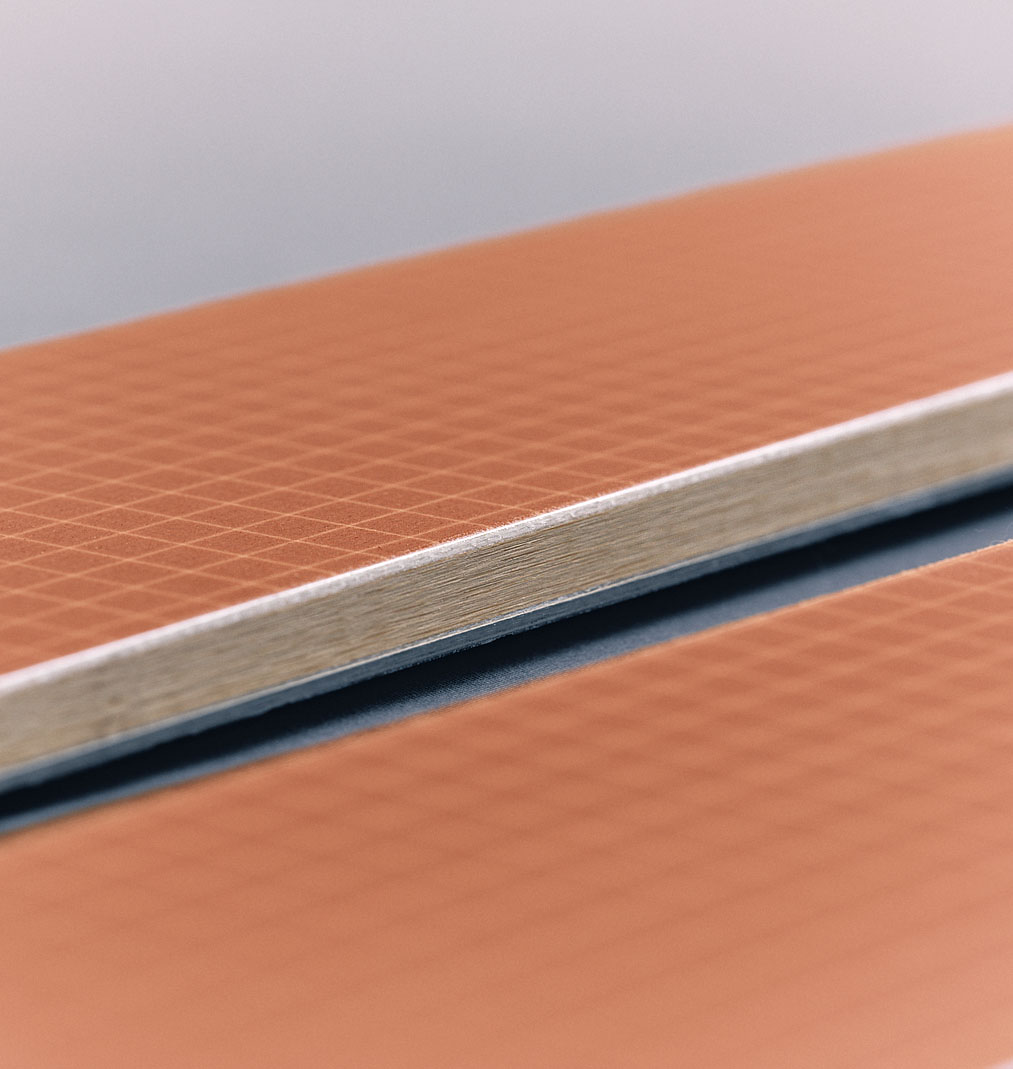
Why a plastic sidewall? ABS is less stiff than bamboo. We run the bamboo all the way to the edge: its natural stiffness gives more grip, more impact resistance, and less plastic.
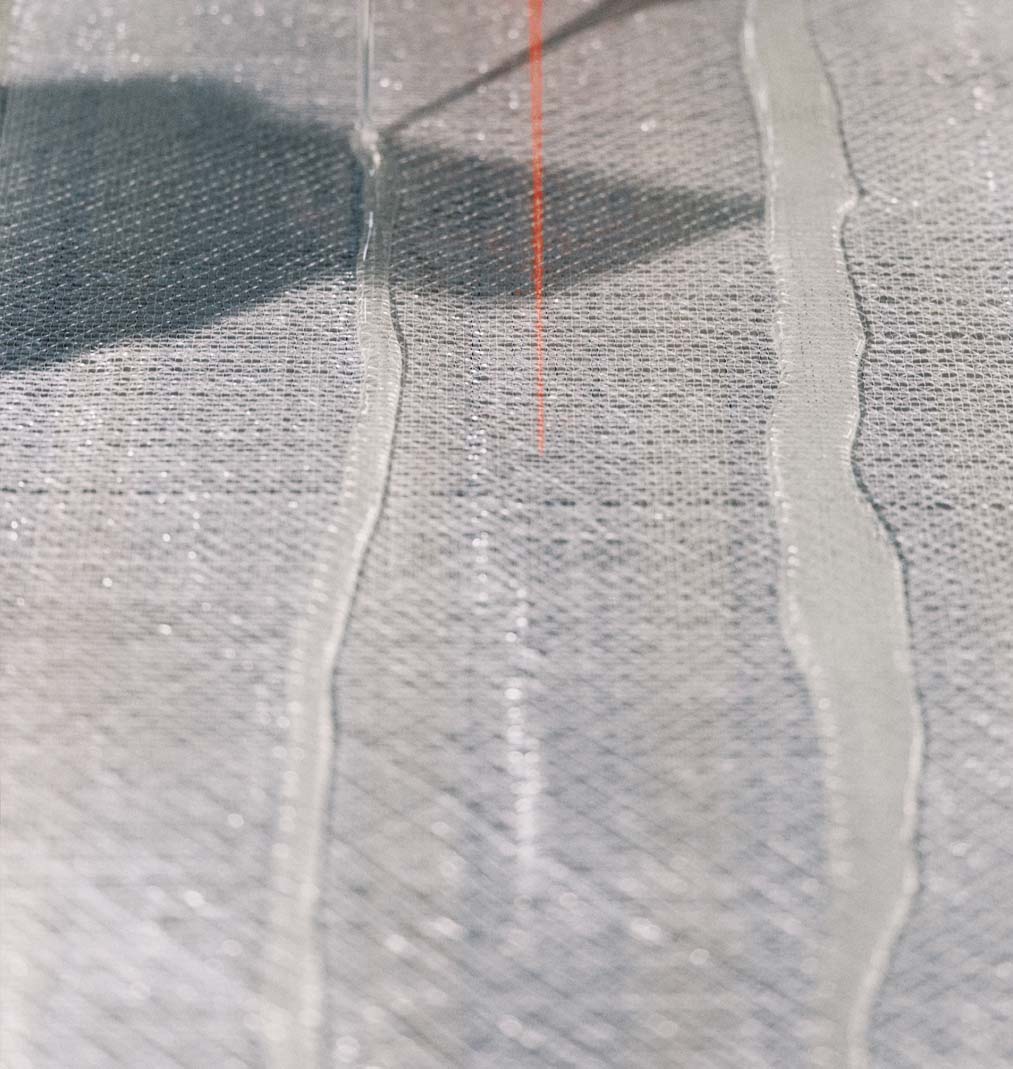
On each face of the core, a 640 g/m² UD for flex and a 625 g/m² triaxial for torsion. Nearly 2,600 g/m² per ski: a generous weight of fibre, without being an ultra-stiff structure. Learn more
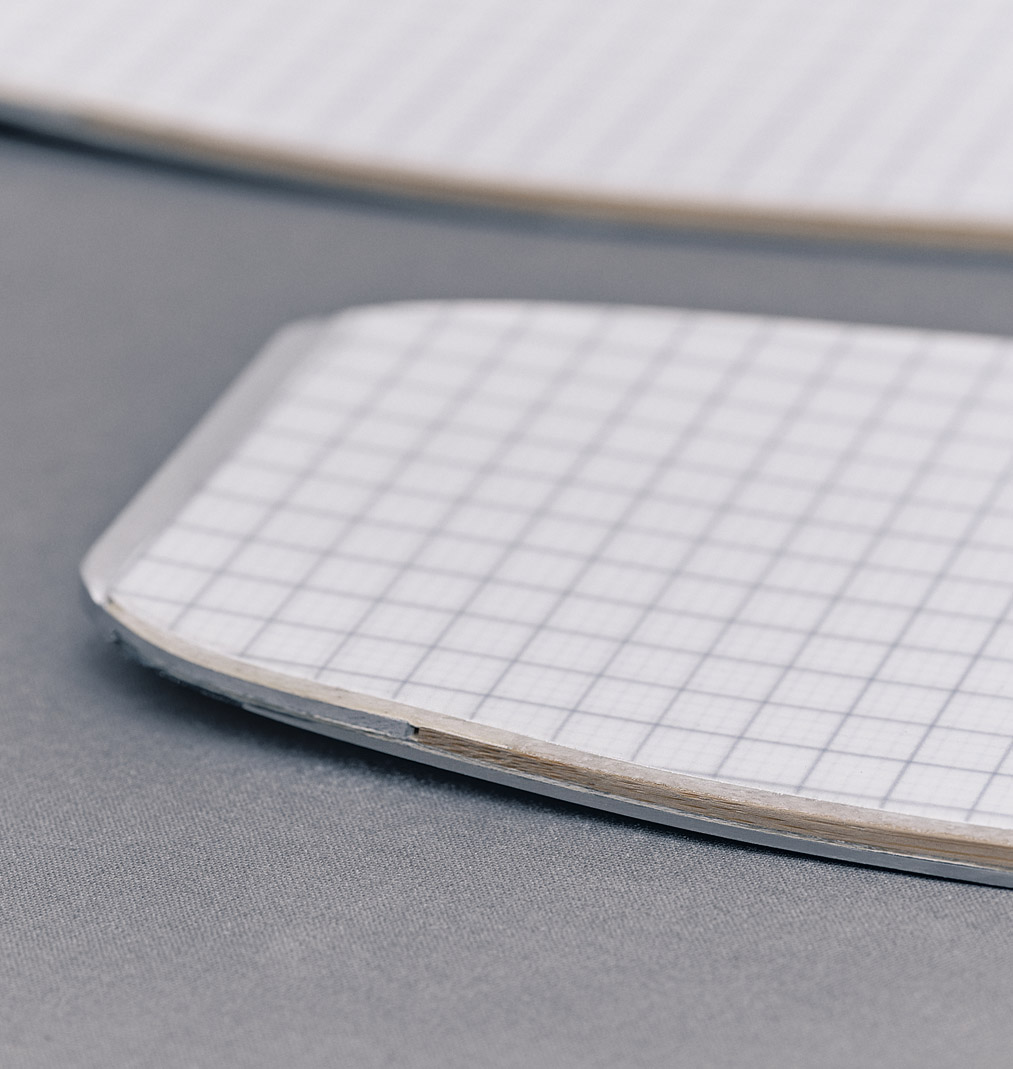
Most skis make do with a plastic tail cap, or at best 2017 aluminium. Ours is 7075, the aerospace alloy, nearly twice as resistant to deformation. Protection like this needs anchoring to match: sandblasted, bonded onto a 0.2 mm rubber layer soaked in epoxy, it is built 40 mm into the structure, 2 mm thick. The Rolls-Royce of tail protection.
Across the whole range, except the twin-tip ski.
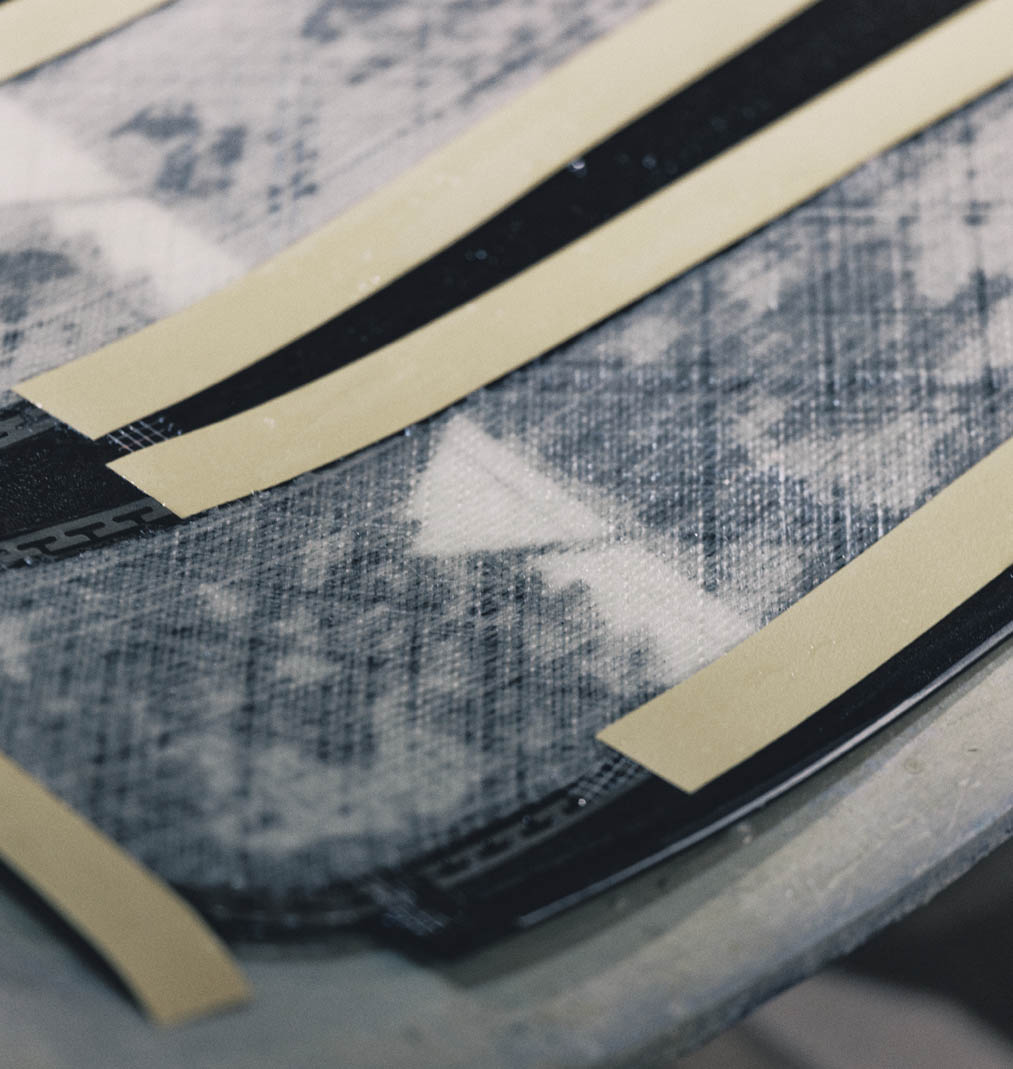
It is not the core that tires, it is the bond between the core and the fibres, worn down by shear. We reinforce it: two glass veils rather than polyester, for better strength and better ageing, a bonding interface, and a reserve of adhesive. 12 years of hindsight: the structure stays intact. The result: performance that lasts far longer, where a conventional ski gradually loses its snap.
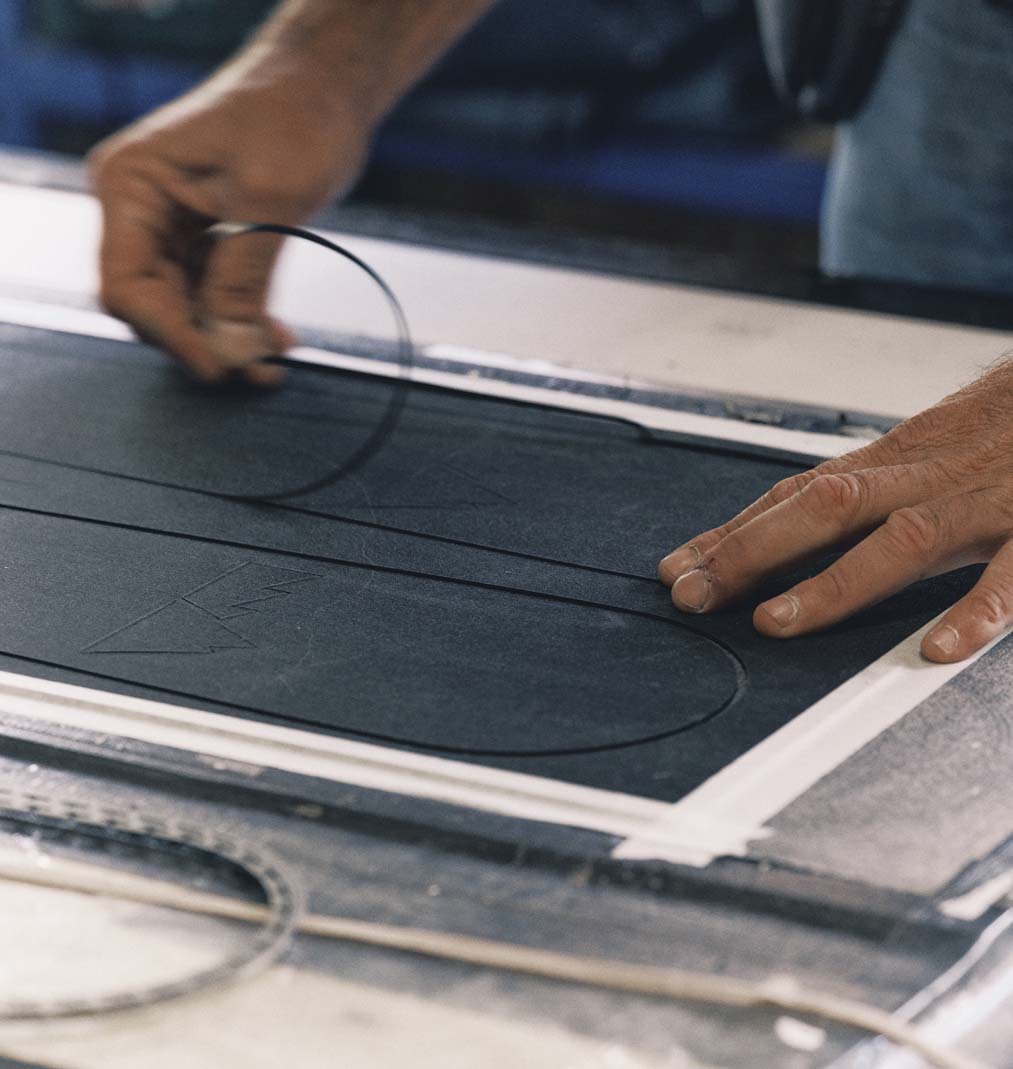
Ultra-high molecular weight polyethylene, sintered by CPS in Germany: a fast base that takes wax well and is easy to repair. 1.5 mm thick when fitted, 1.2 mm after finishing: plenty of margin for many tunes. Like the Waelzholz edges and the Titanal, it is one of the components we do not make ourselves: they are not produced in France.
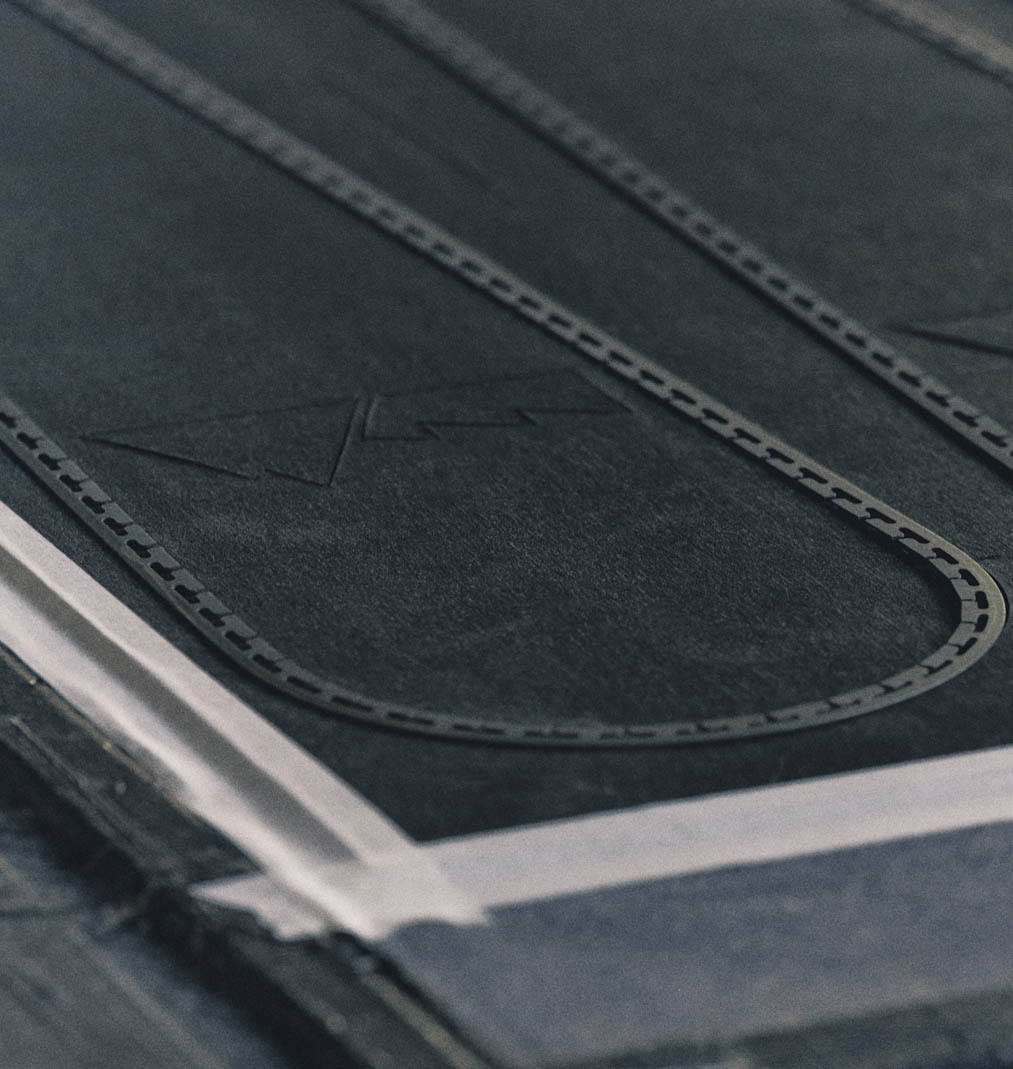
Austrian steel from Waelzholz, the world leader in ski edges: a 2 × 2.2 mm edge, anchored by a T-stamped tab, embedded in epoxy, topped with rubber and then bamboo, which absorbs impacts. Learn more
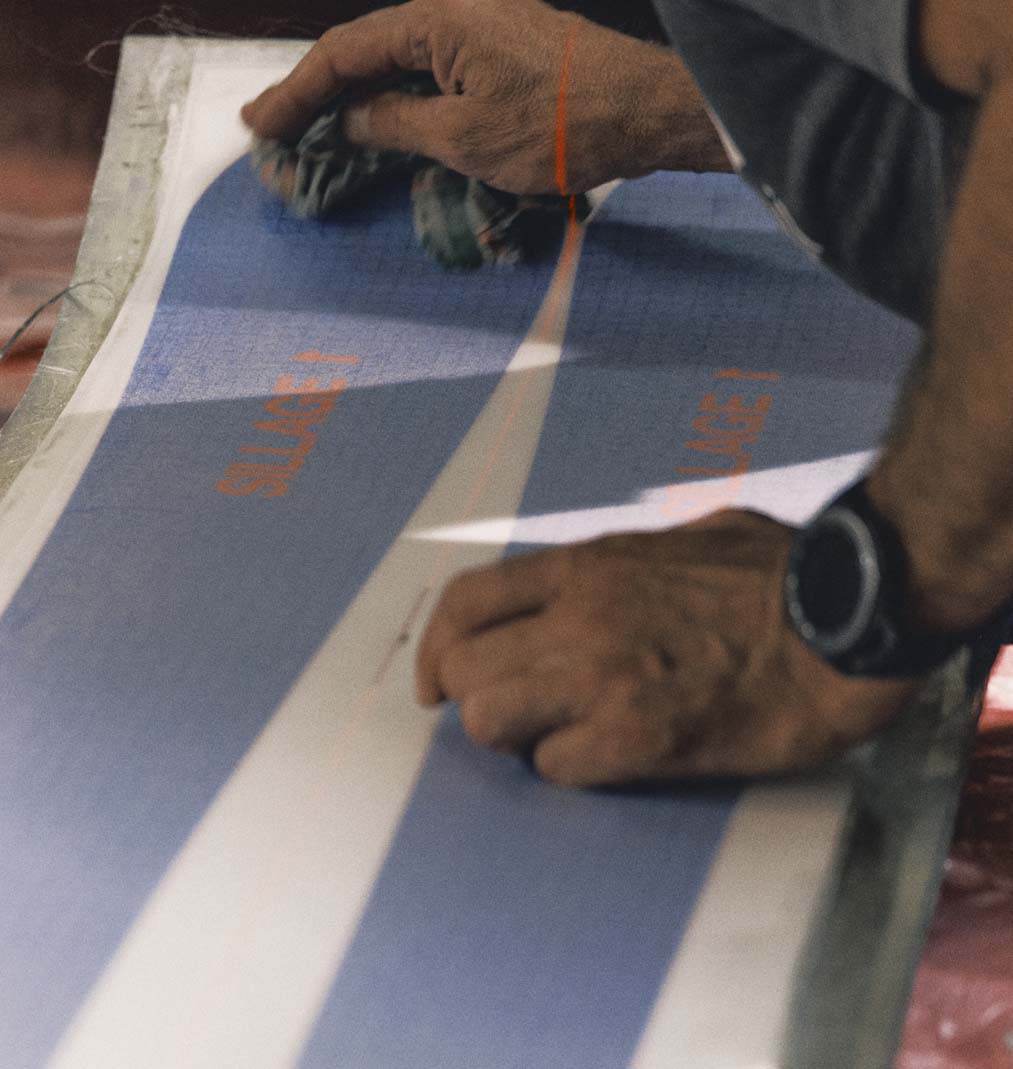
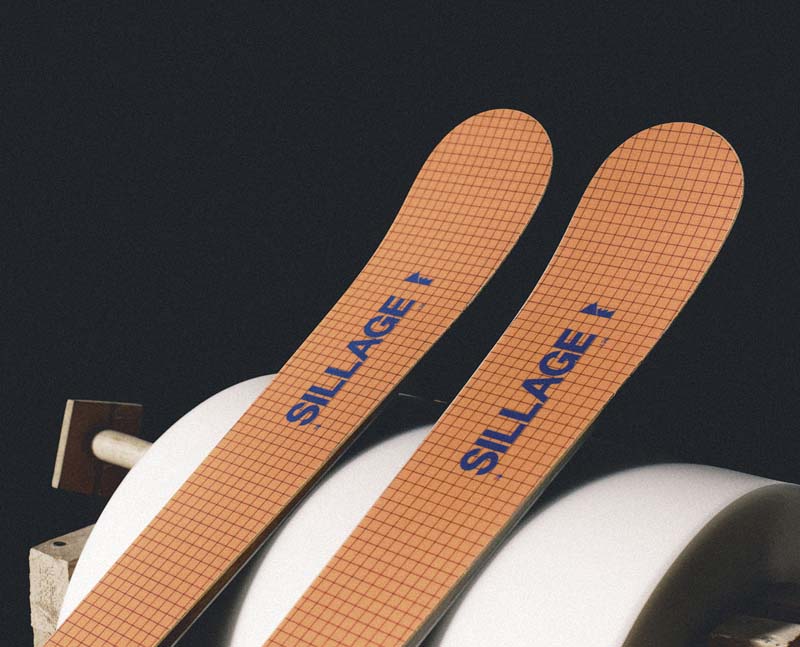
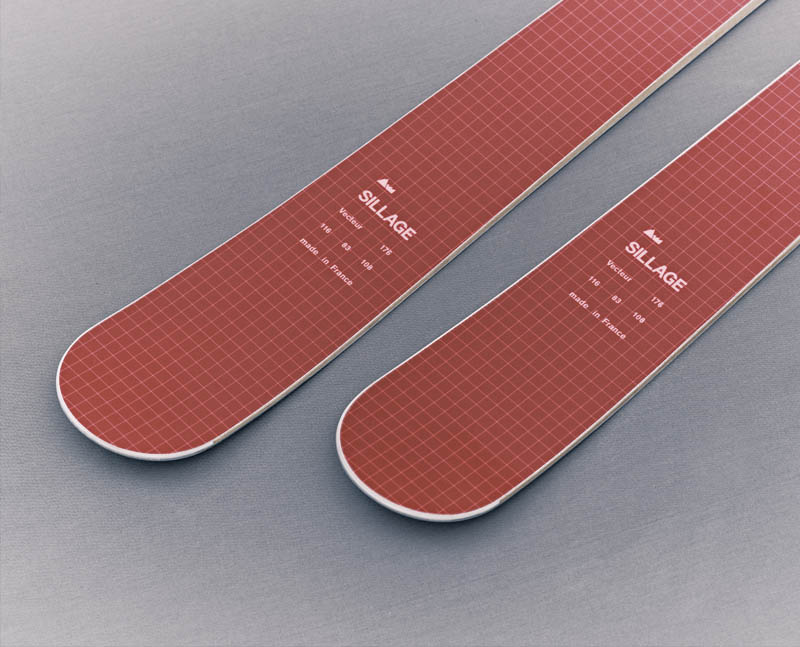
As with the major manufacturers, the graphics are sublimated under a clear, textured 0.5 mm polyamide: scratches never touch the image. Then, something few do, the white is brought out by an epoxy lacquer. Special projects
A core on its own bends far too easily. It is the fibre (glass or carbon, or an aluminium sheet such as Titanal®) that gives the ski most of its stiffness. Bonded above and below, the fibres work like the two flanges of an I-beam: when the ski flexes, the bottom fibre stretches and the top one compresses. The core acts as a spacer: it holds them apart, and the further apart they are, the stiffer the ski.
A fibre only works in the direction of its threads. So we combine two fabrics, each with its own role.
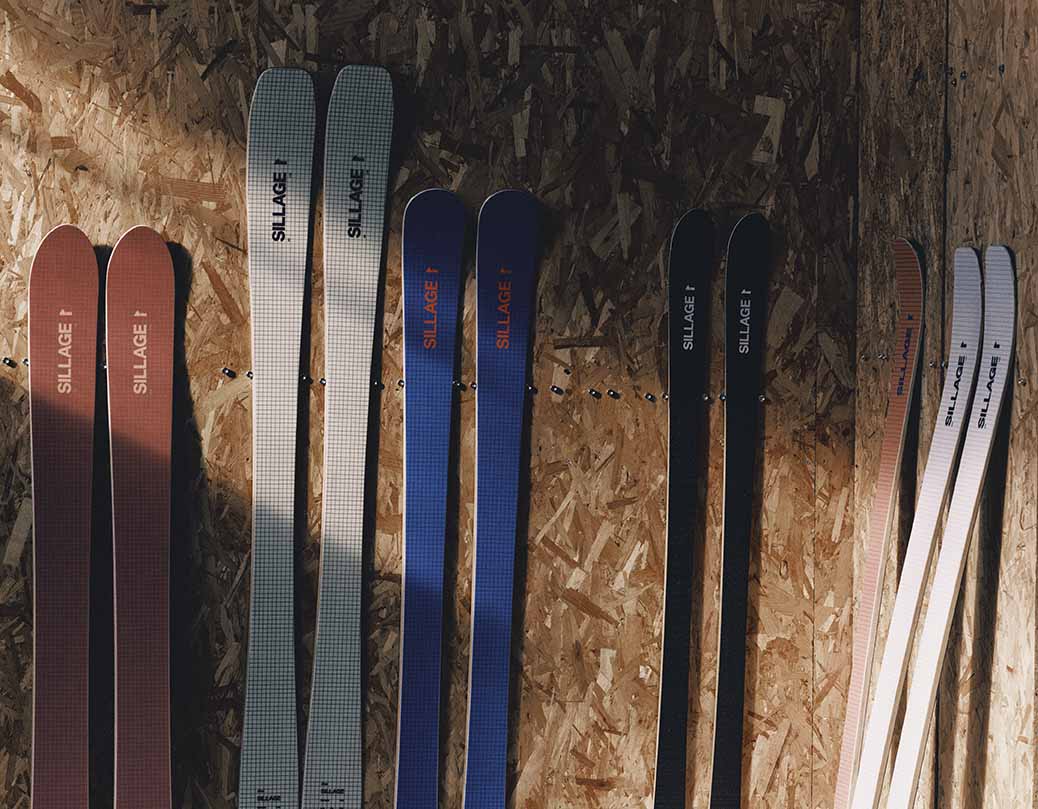
Ligne 78 / 90Terrain 90 / 102Vecteur 83FS / 114FR
Each face of the core gets a 640 g/m² UD and a 625 g/m² triaxial. A generous weight of fibre, but not an ultra-stiff structure: we keep the freedom to play with stiffness and bring suppleness and flex to the ends, with enough material that the ski does not collapse under a committed skier.
The UD is always the layer furthest from the core, on top as well as underneath: that is where it works hardest.
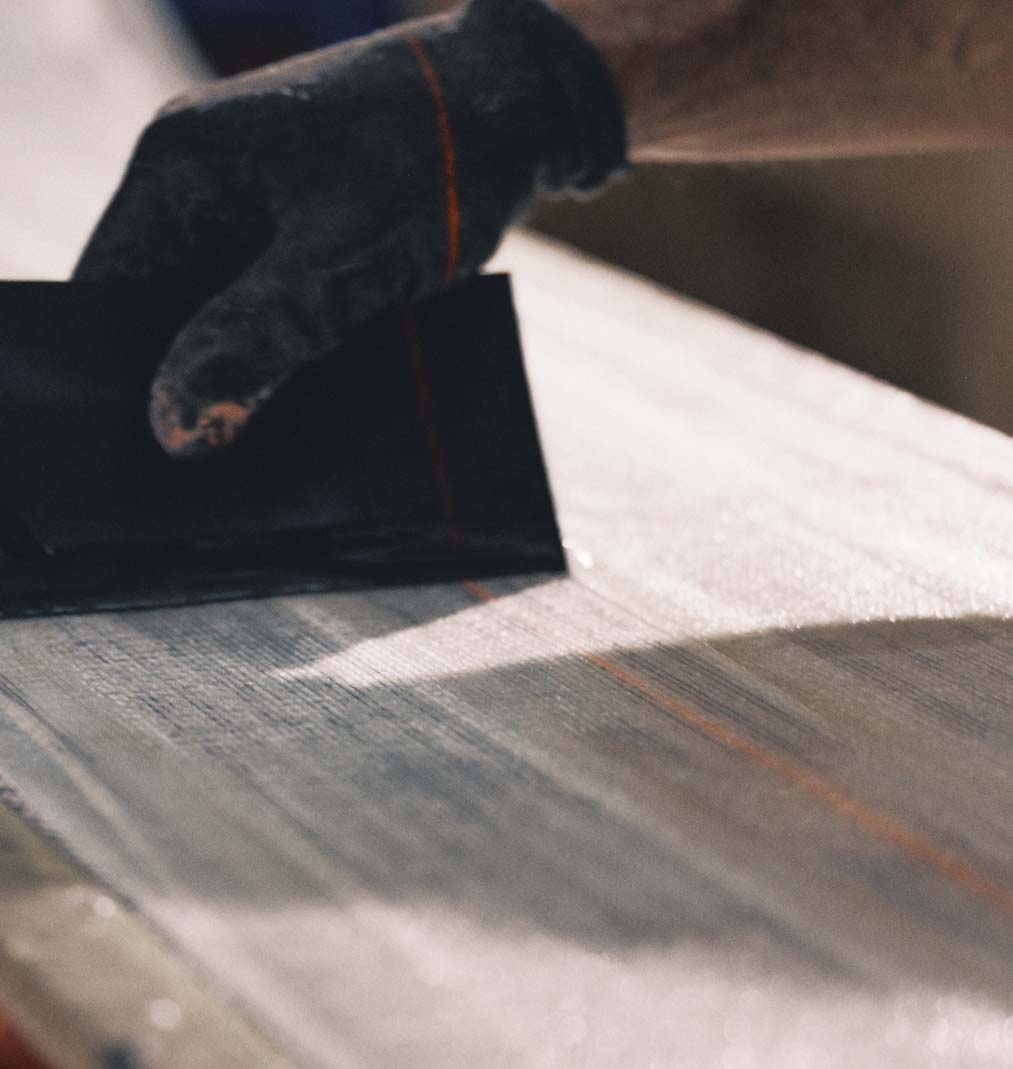
All the fibres run along the length of the ski. It sets the flex : the more there is, the stiffer the ski.
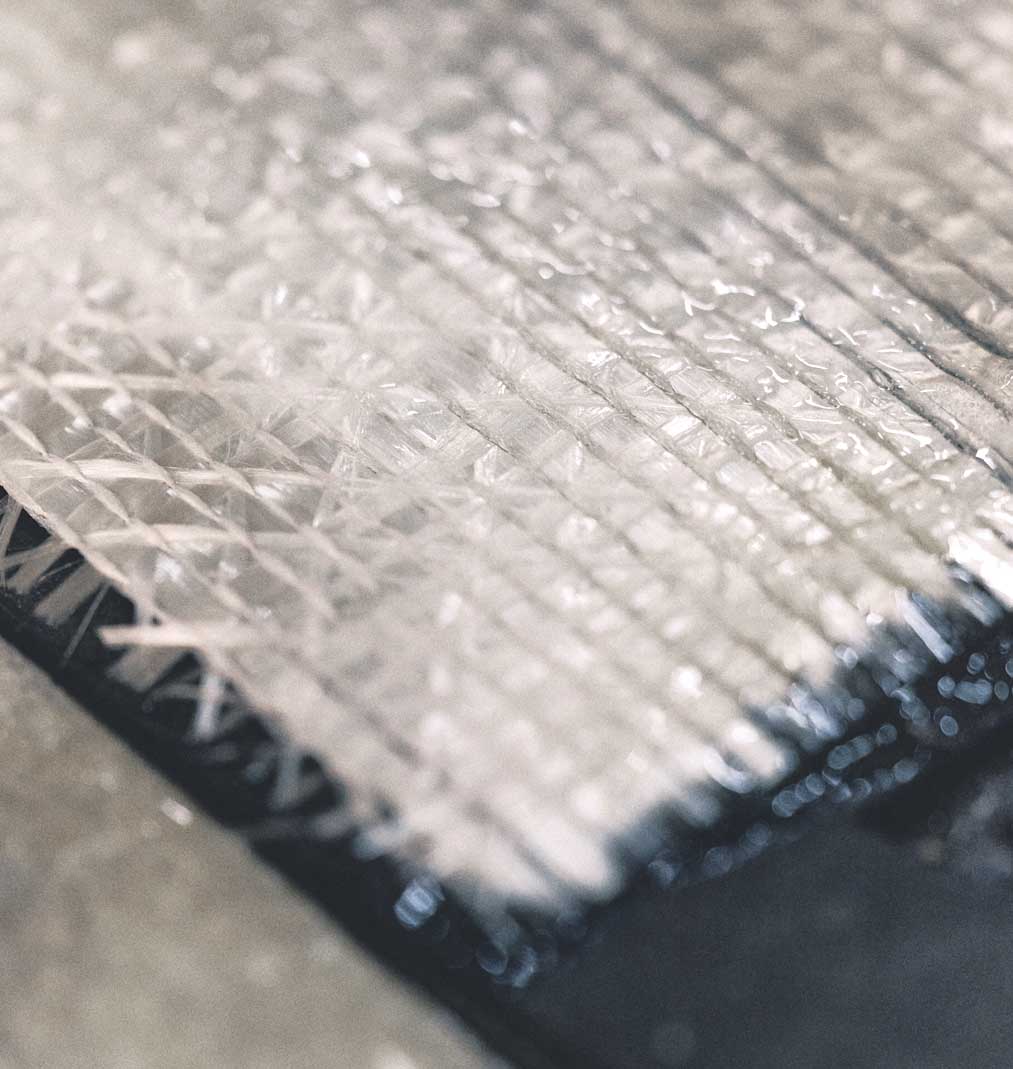
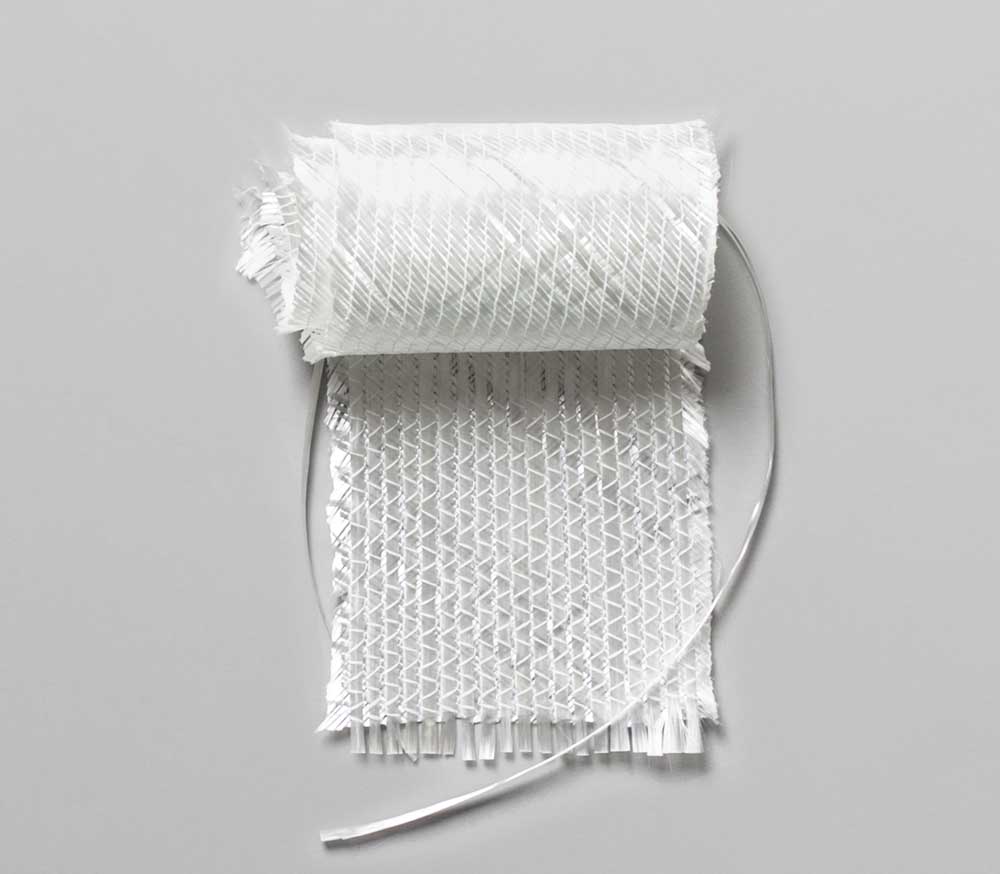
Fibres crossed at +45° and -45°, plus a layer along the axis. It holds the ski in torsion : the tip and tail do not twist, and the edge stays planted, even on ice.
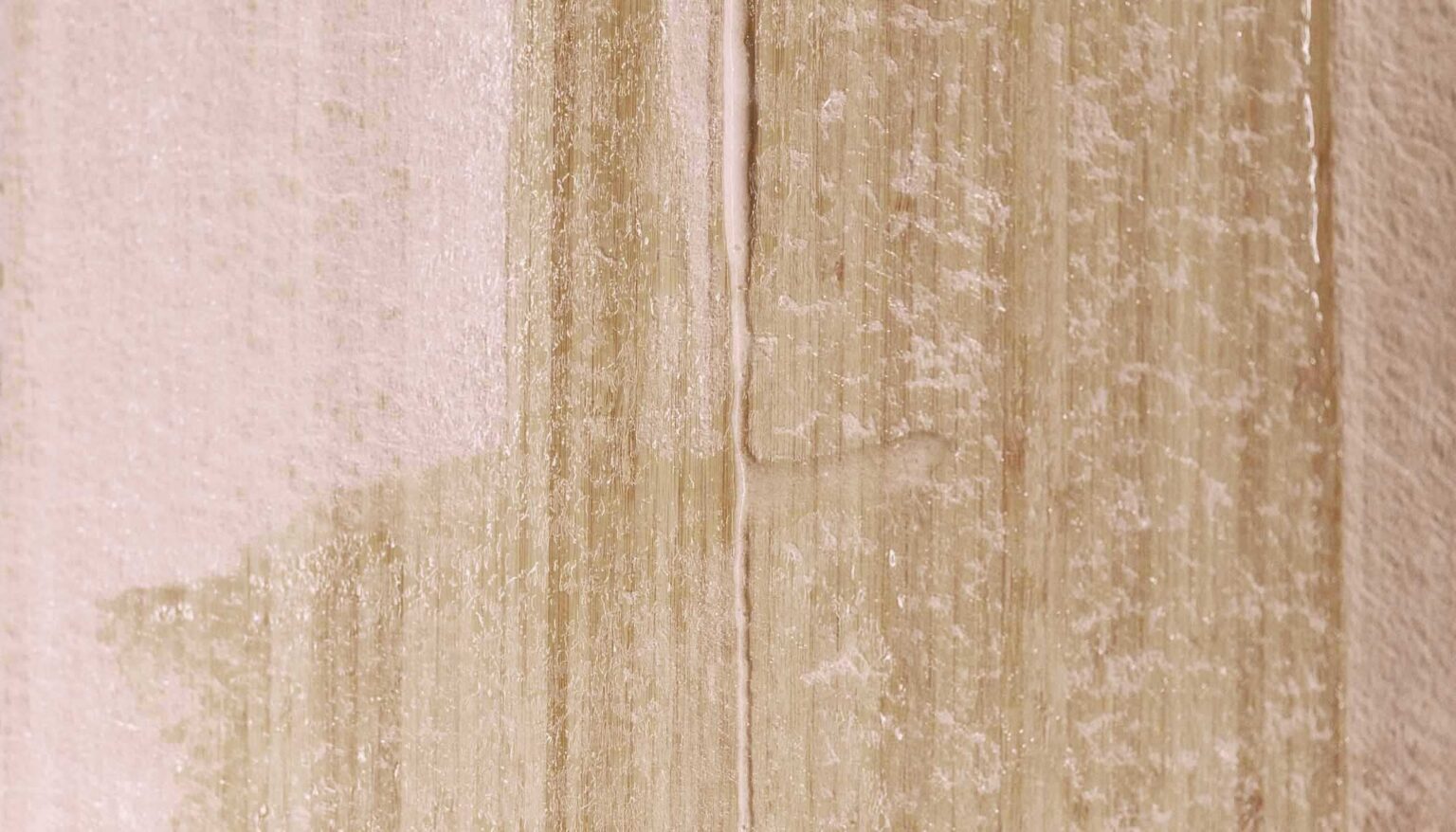
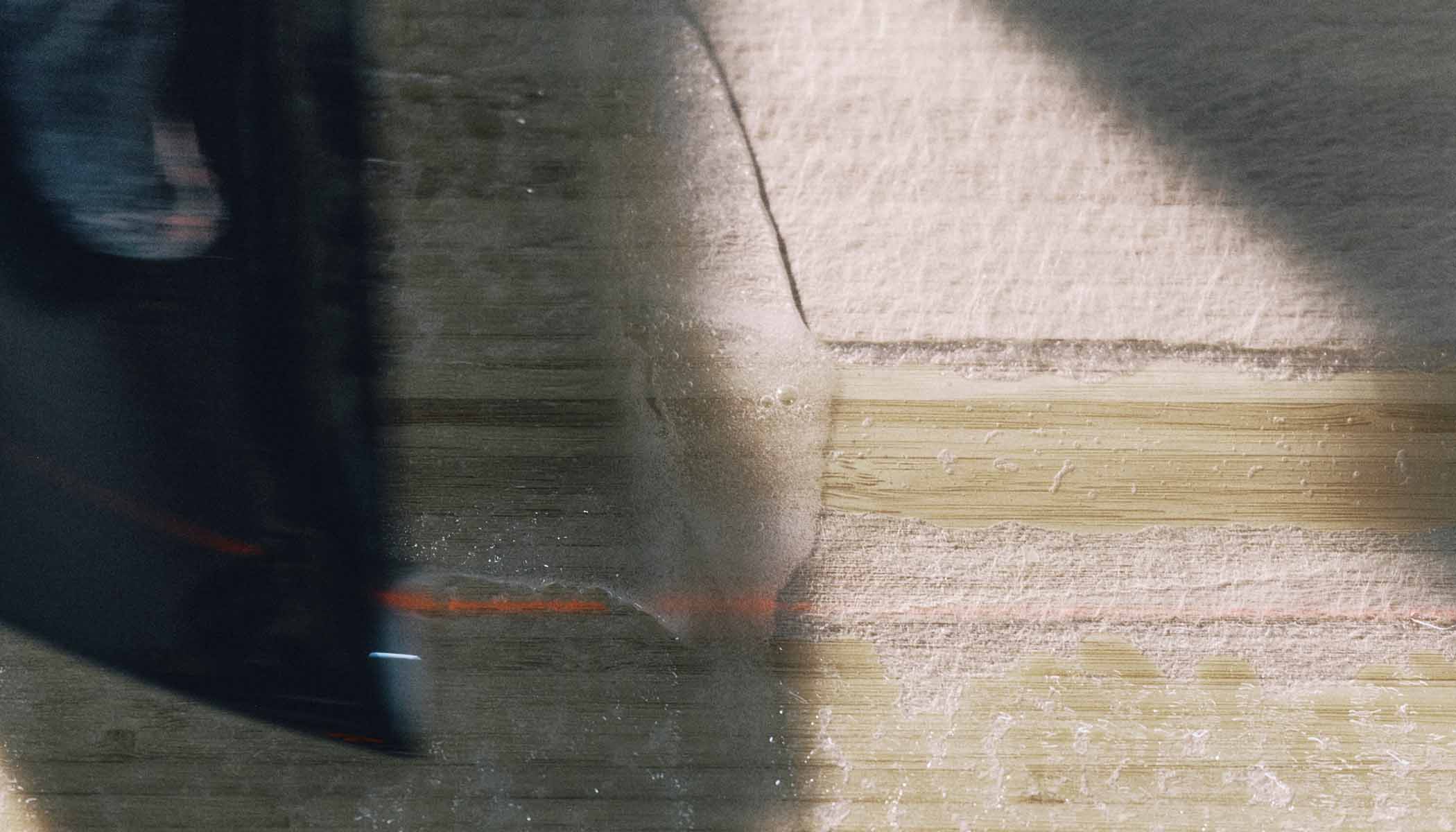
When a ski loses its snap, the core often gets the blame. Wrongly: what wears out is the bonding interface between the core and the fibres. With every flex, they slide ever so slightly against each other. This shear, repeated thousands of times, wears the bond: the fibre stops working with the core, and the ski goes soft. That interface is precisely what we reinforce.
No cutting corners on bonding: the interface keeps resin in reserve, where others count every gram.
A Sillage ski lives, takes knocks and gets worn on the surface. But thanks to the glass veils, its structure and cohesion stay intact: performance holds up over time, and the engine is untouched. And when the surface has seen better days, our bamboo core, which runs all the way to the edge, means it can be renovated. That is what we offer with our programme:
With the engine preserved, ReNouveau makes complete sense: at the same time, it extends the life of the cosmetics.
We use all three, each where it performs best.
Terrain 90 / 102Vecteur 83FS / 114FRLigne 78 / 90
Lively, comfortable, forgiving, with plenty of rebound. The best compromise for skiing everywhere.
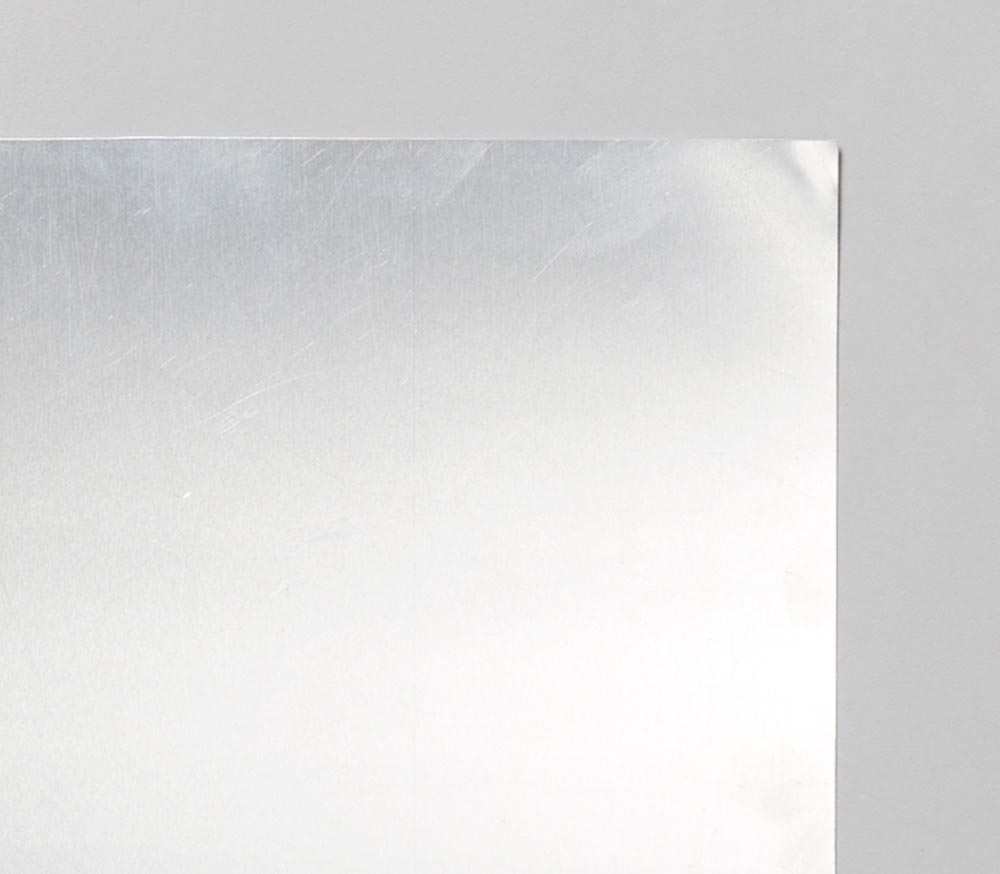
Heavier, it damps and stabilises: unflappable at high speed, for a committed skier.
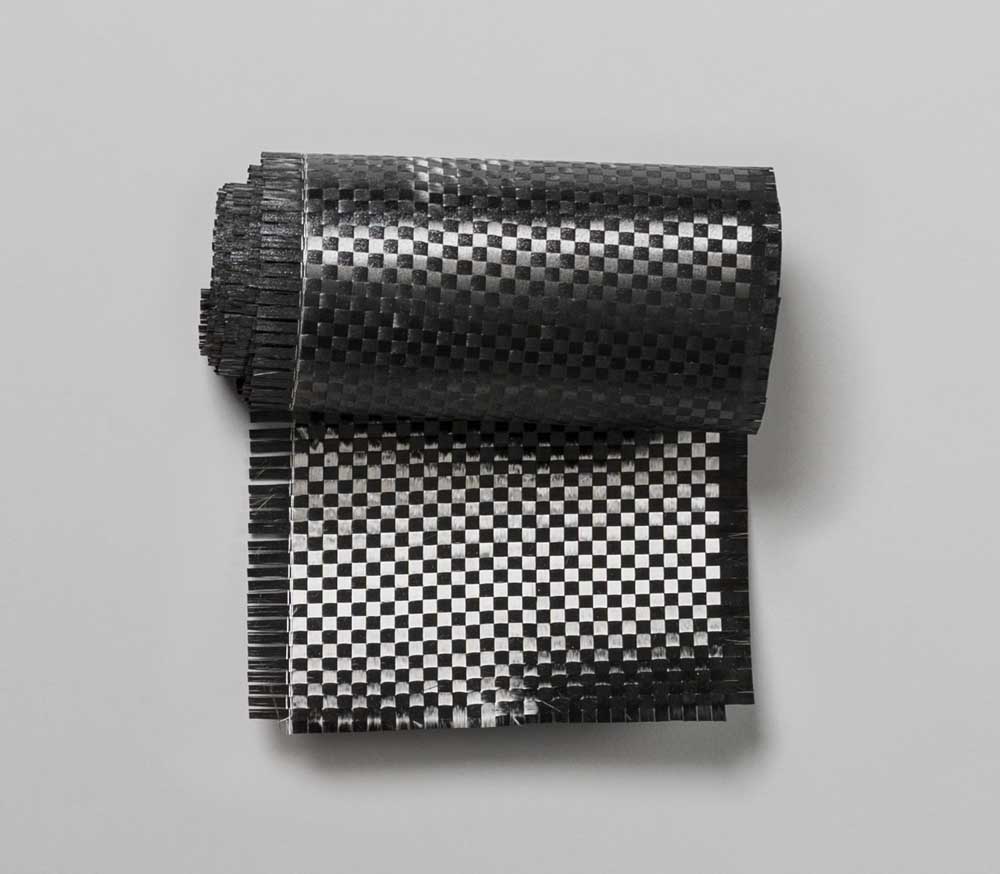
Stiff and light, in a high-strength version: climbing is effortless, and the ski lasts.
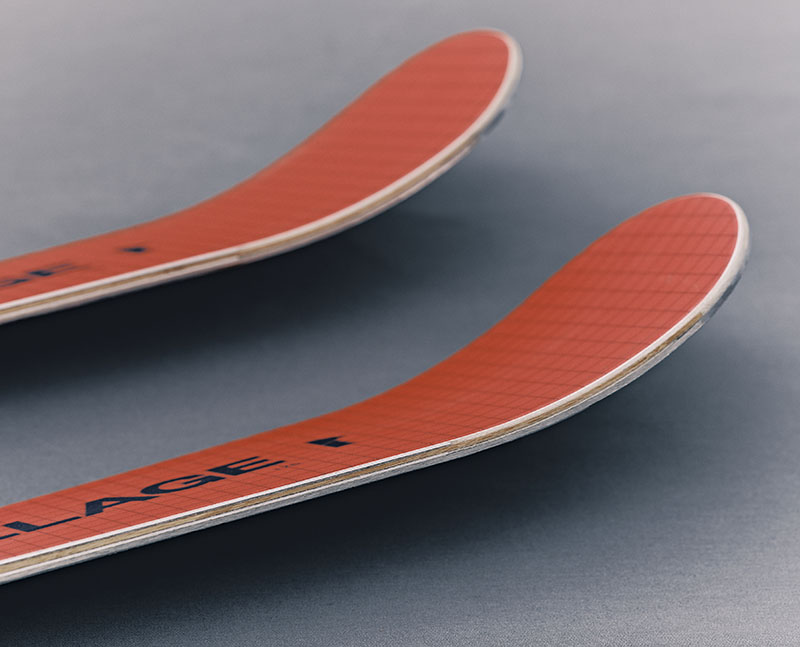
On hard snow, the edge is what bites and carves the turn. On our skis, it runs all the way round, tip included: it also protects against head-on impacts.
An edge is only as strong as its anchoring in the ski. No cutting corners on bonding.
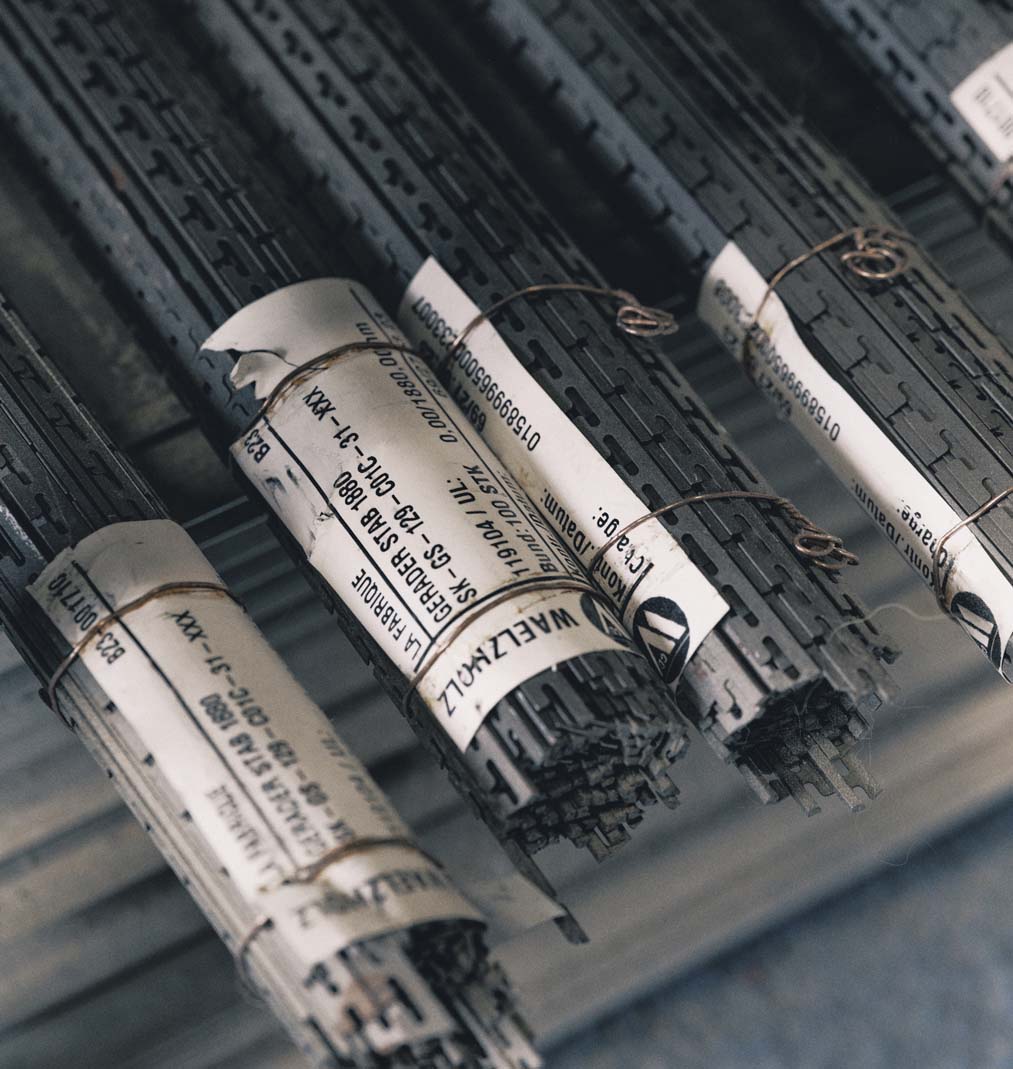
Our edges come from Waelzholz, in Götzis, Austria, the world leader in ski edges: profile 129, C60/C67 carbon steel.
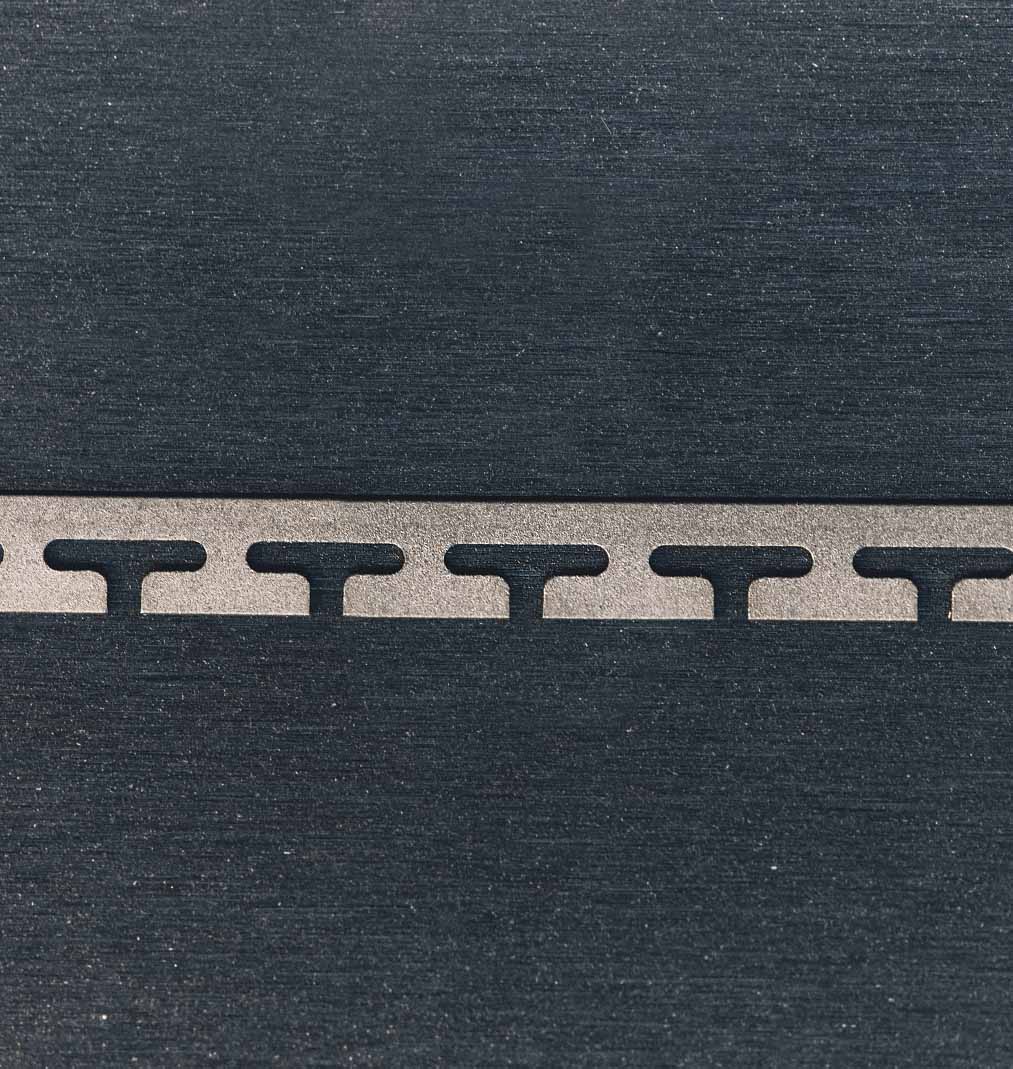
An edge 2 mm thick and 2.2 mm wide: very substantial. More material means more tunes possible over the seasons, and an edge that takes rocks without bending.
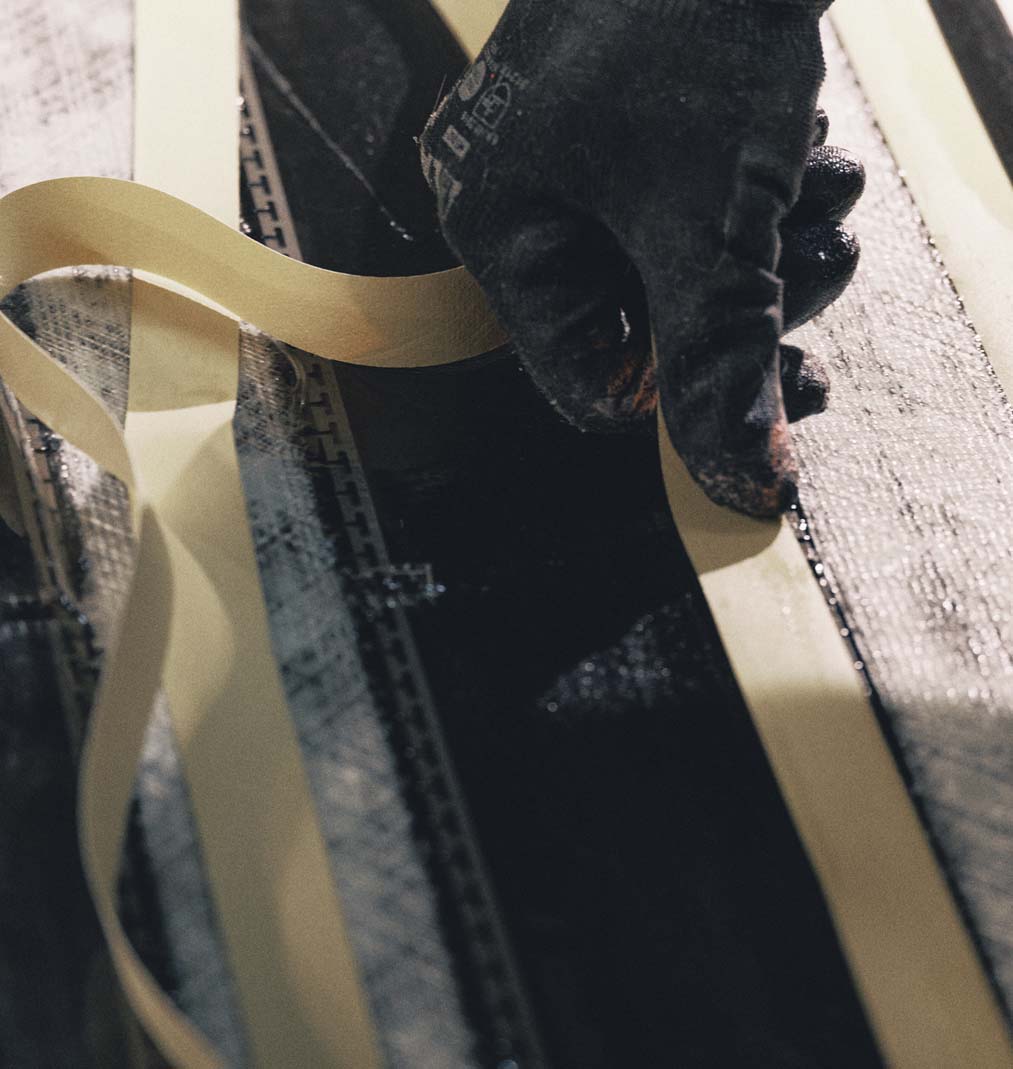
Behind the edge, a 0.6 mm tab cut into a T every 13 mm: this is what is called stamping. The epoxy resin fills these cut-outs: the edge is not just bonded, it is mechanically anchored in the ski.
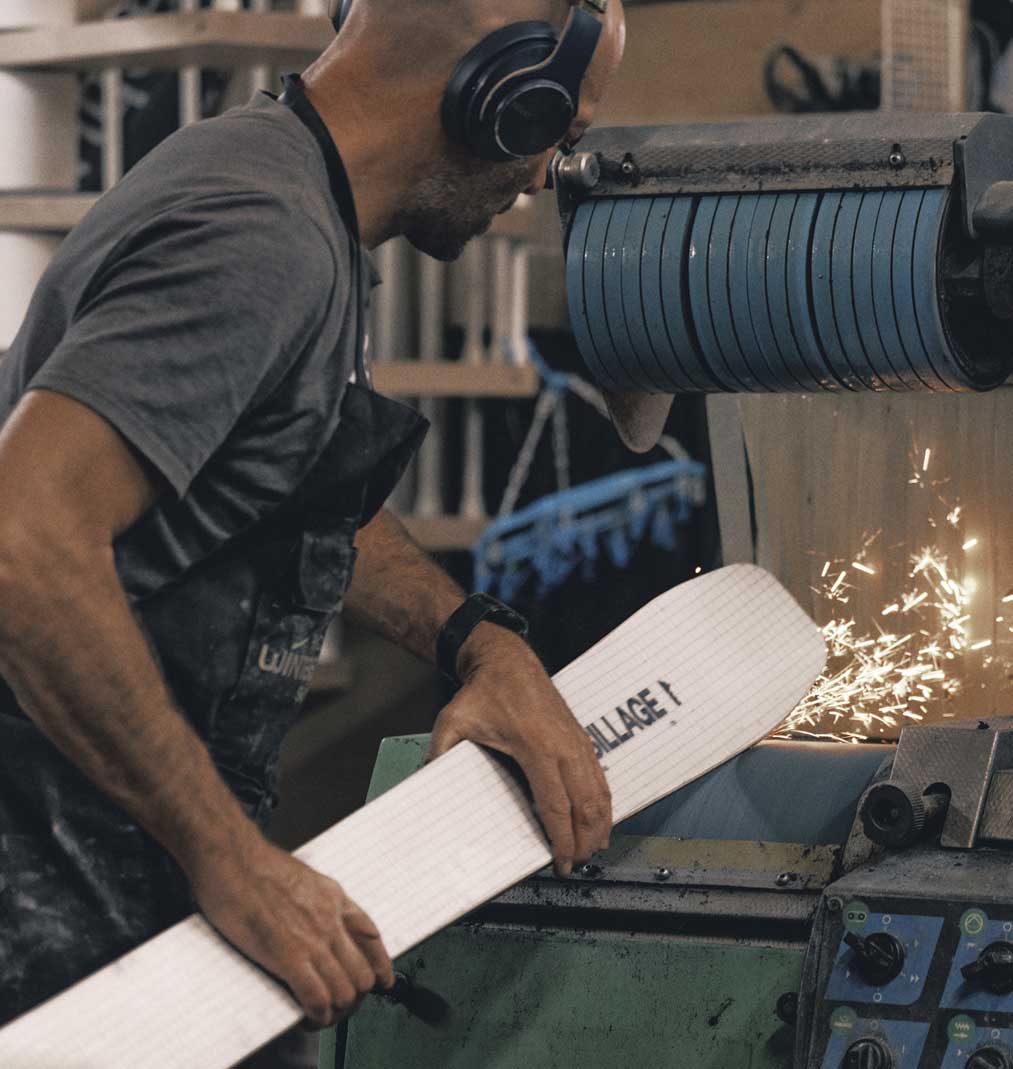
A thick edge can be reconditioned many times: your skis come back to the workshop and leave freshly tuned. Our factory tune: 1° base bevel, edge sharpened to 88°.
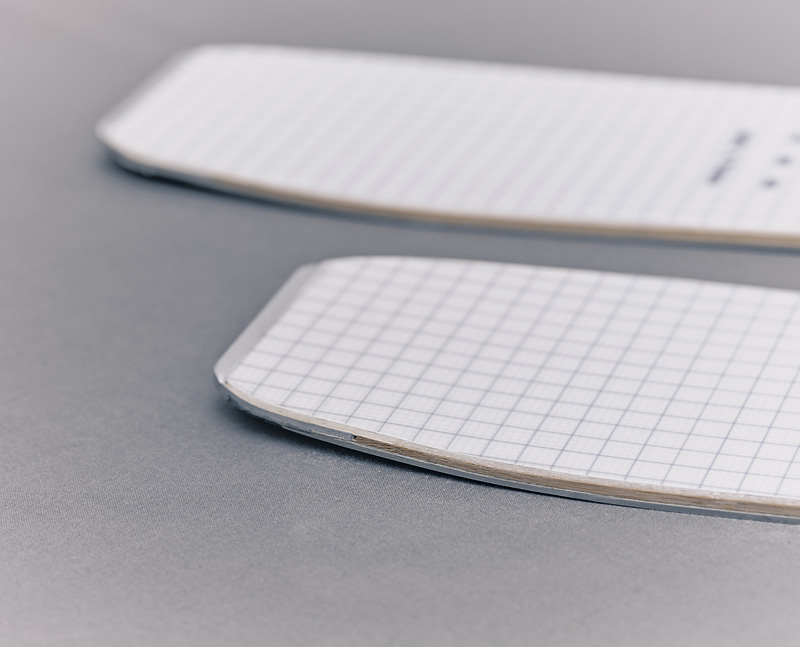
Most skis place an ABS sidewall above the edge. ABS is less stiff than bamboo, and it passes impacts on to the edge instead of absorbing them. On our skis, the bamboo core runs right down to the edge.

Stiffer than ABS, bamboo keeps the edge engaged.
Where ABS deforms, bamboo absorbs impacts before they can tear the edge out.
No extra ABS: a leaner construction, and CO2 saved.
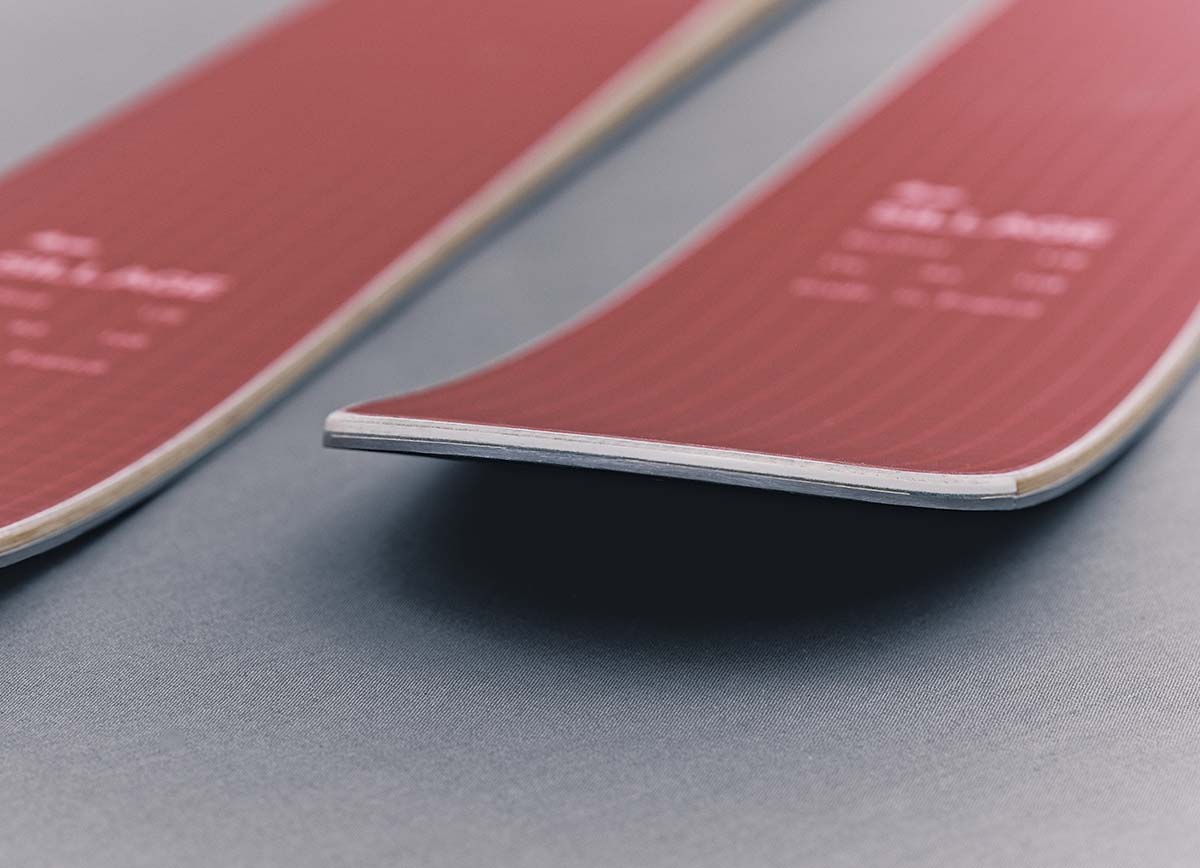
A hidden rock, an impact off-piste or even on piste: edge tear-out happens regularly. No manufacturer can promise a ski whose edges will never tear out, and neither can we.
What we do promise: a wide edge, embedded in epoxy, cushioned by rubber and protected by bamboo. A ski built to be tough.
On this common base, each family gets what makes it unique.
Two layers of aluminium alloy that damp and stabilise: unflappable at high speed, with strong grip on hard snow.
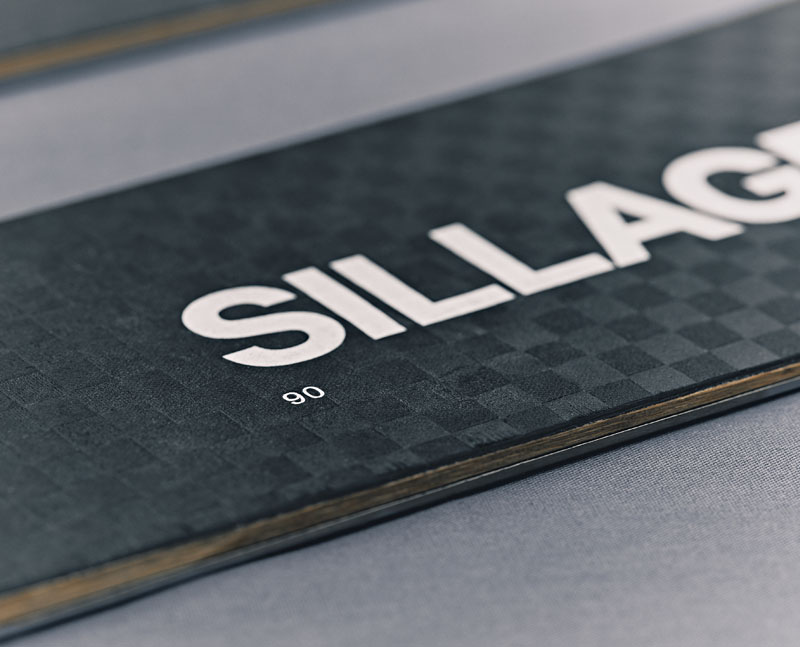
100% high-strength carbon, proven over time. A few dozen grams more than the very lightest, but a ski that will not break easily.
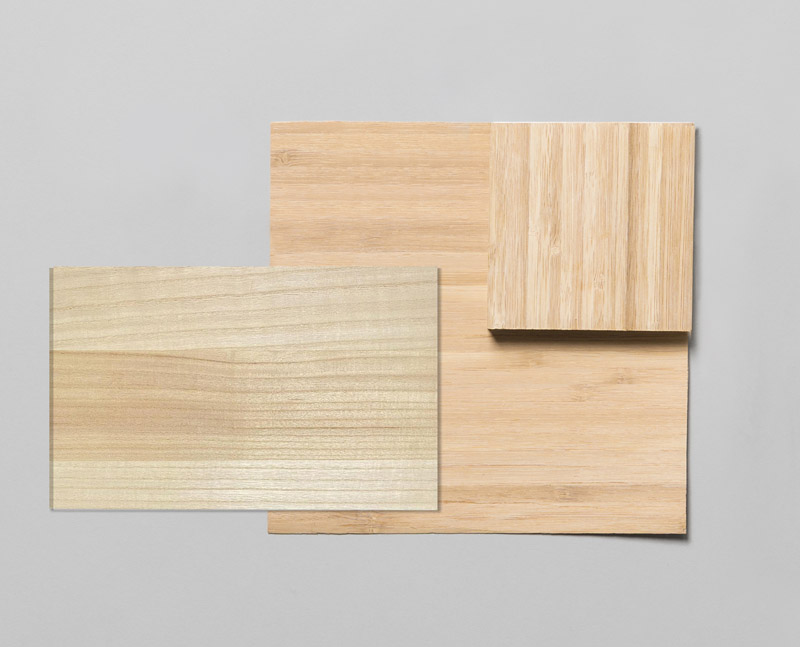
Paulownia, a very light wood, combined with bamboo to save even more weight on the way up.
A classic camber that puts the whole edge to work on groomed snow, with a more accessible construction than the Ligne 67.
Raised tip and tail: the ski pivots easily, floats in powder and forgives in mixed terrain.
Born from the ski of Marie Martinod, Olympic halfpipe silver medallist: ski and land in both directions.
Flex is the way a ski bends under your weight. But what really matters is how it is distributed between tip, waist and tail. We tune it structure by structure.
Turns easily at moderate speed
Forgives mistakes
Handles powder and bumps better
Stable and precise at high speed
Grips on hard snow
Demands more commitment
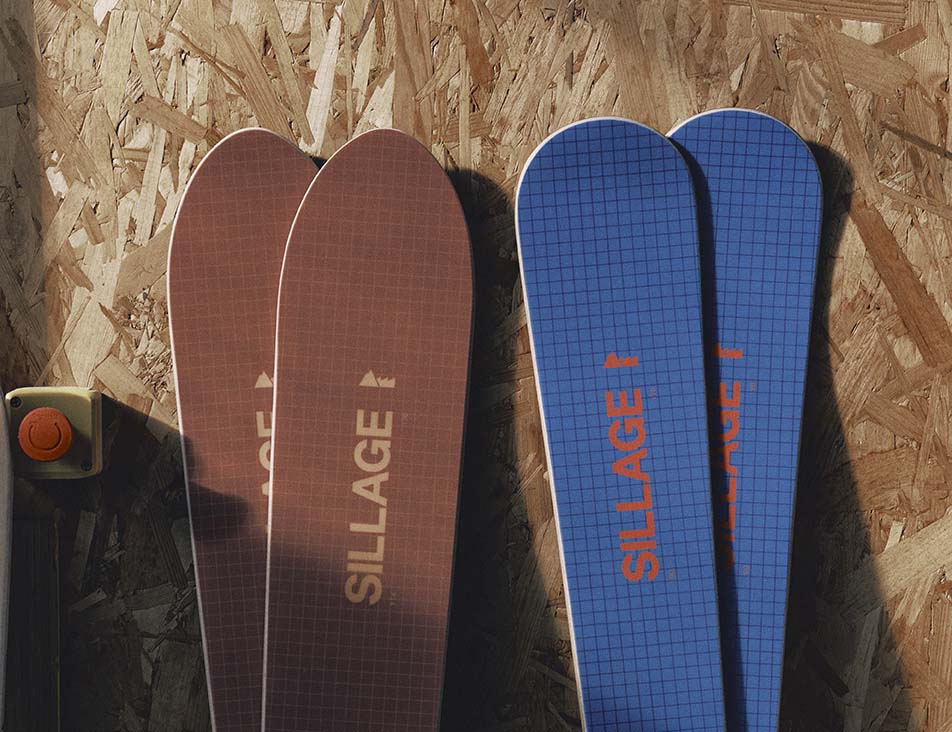
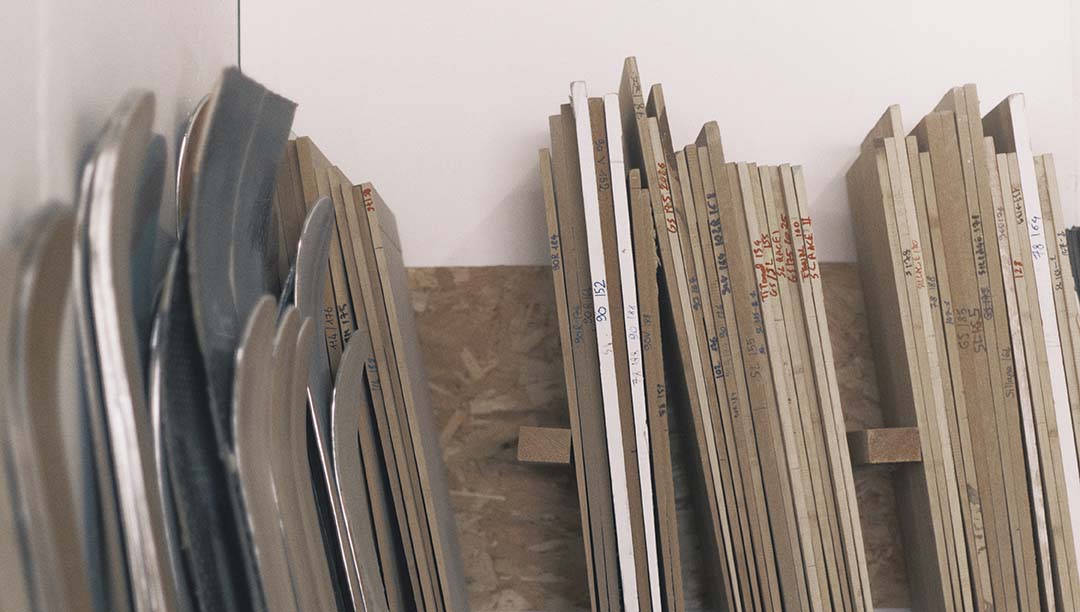
A ski's stiffness is set mainly by its thickness: the thicker the core at a given point, the stiffer the ski there.
So the "thickness curve", from tail to tip, shapes how the ski behaves. Flat, the stiffness is spread along the whole length. Domed, the waist is much stiffer than the ends.
Terrain 90 / 102Vecteur 83FS / 114FRLigne 78 / 90
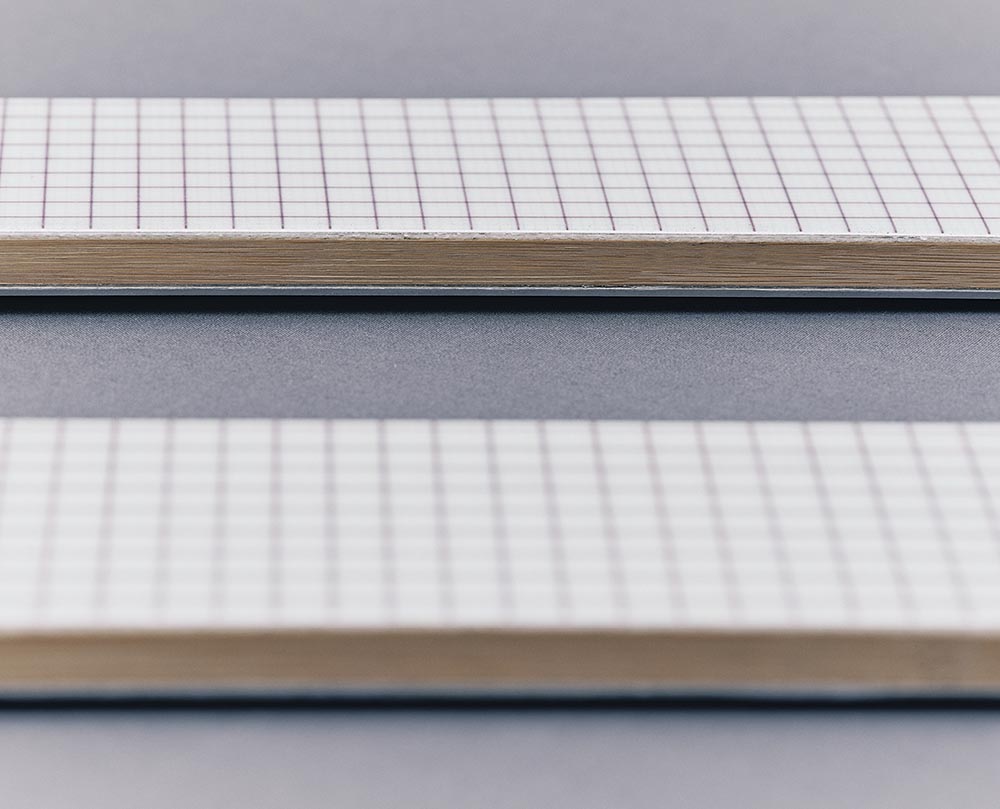
The binding and boot form a very solid block underfoot: they already stiffen the waist a great deal. No need to add more.
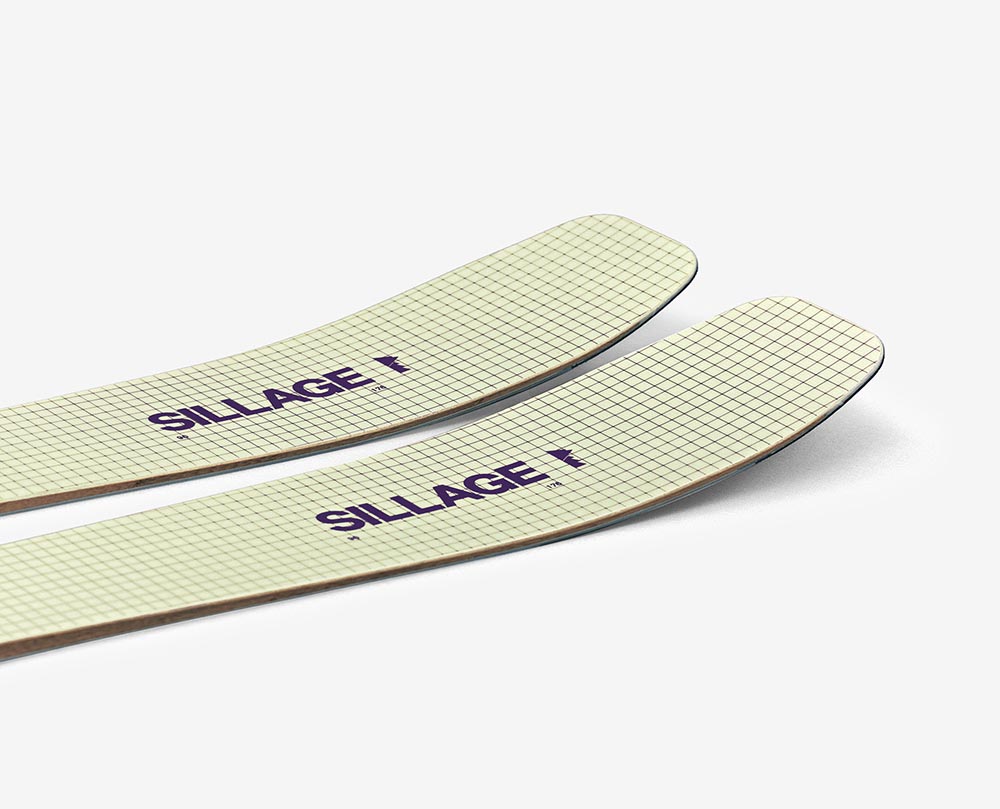
We chose a fairly flat thickness curve. The tip and tail flex well: the ski rolls through the whole turn, smoothly.
Add bamboo, which absorbs impacts: we can stay with structures that are not too stiff, very comfortable and very enjoyable to ski, without losing grip.
Ligne 67
Softer ends, a much thicker waist: a ski built to seek edge angle, pressure and power.
it floats and chatters as the speed picks up
it collapses and lets go on hard snow
you go "over the top" at the end of the turn
it refuses to turn short at moderate speed
it bounces in the bumps and tires you quickly
it only flexes when you really attack
Your build matters as much as your level: a heavier skier bends the ski more. Tell us your height, your weight and the way you ski: we will point you to the right model and the right length.
The width at the tip, waist and tail sets the radius: the wider the tip compared with the waist, the shorter the ski turns. The profile, camber or rocker, decides how the edge engages the snow.
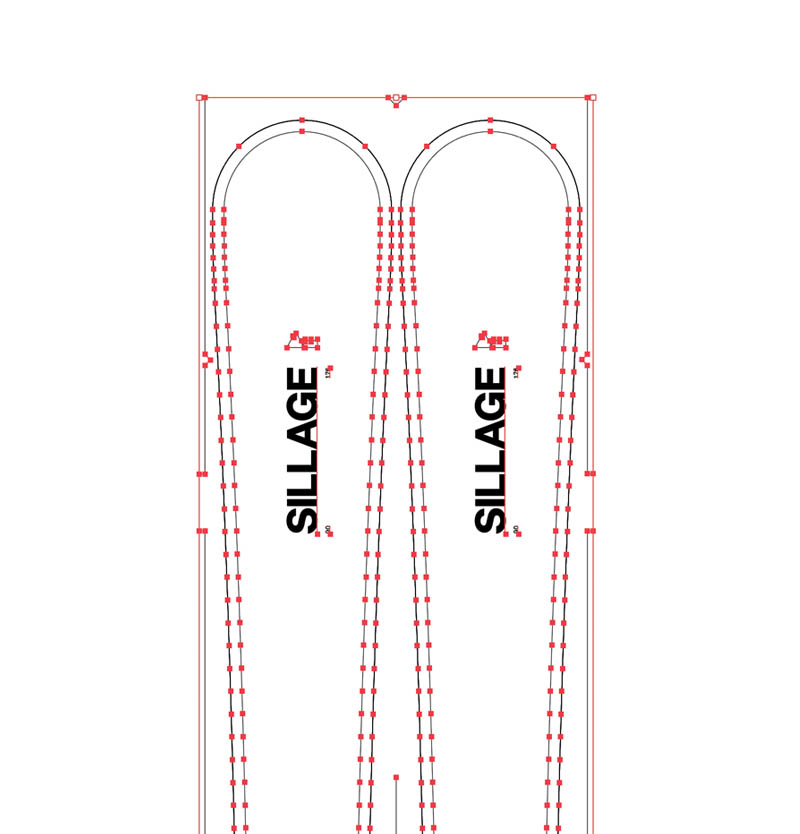
Every model starts from a template. Our Terrain 90 (145 / 90 / 135 mm) takes the idea a long way: a 7.5 m radius for 90 mm underfoot.
With camber, the ski puts its whole edge to work on groomed snow. With rocker, raised tip and tail, it pivots and floats.
A ski's main enemy is the other ski of the pair, and sometimes other skiers' skis too: at every crossing or contact, the edge strikes the top edge of the sidewall.
A pair of skis is a real investment, we know that well. That is why we design our models to last and to be repaired: with (Re)Nouveau, we rework the sidewall at an optimised angle and renovate the topsheet, to extend their life for as long as possible.
250 € dropped off at the workshop · 320 € with shipping in Europe · ready in 1 to 2 weeks
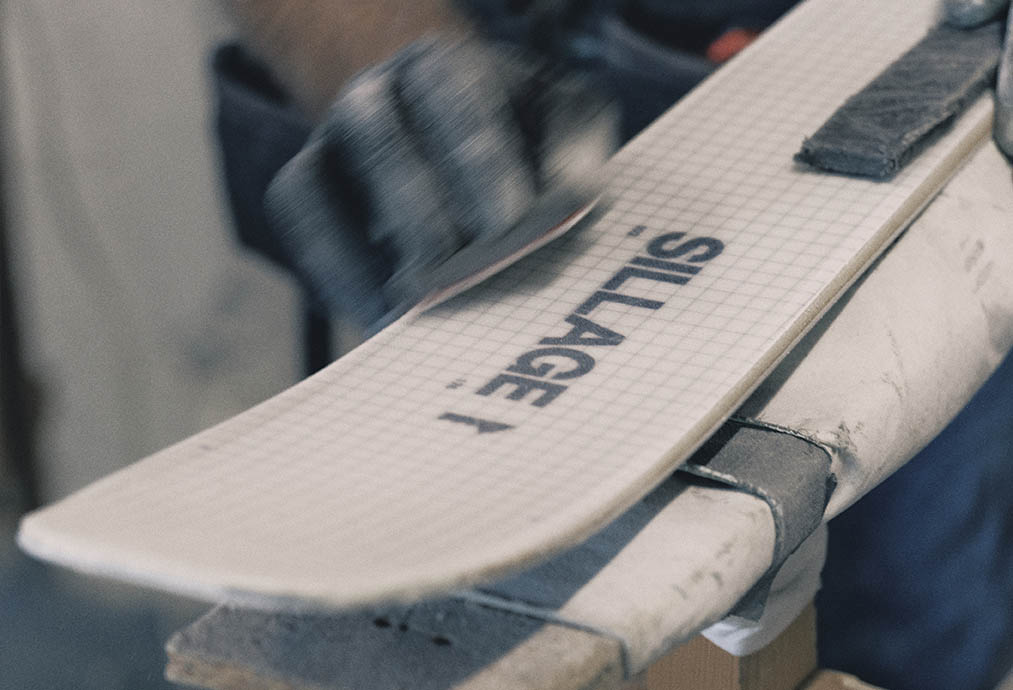
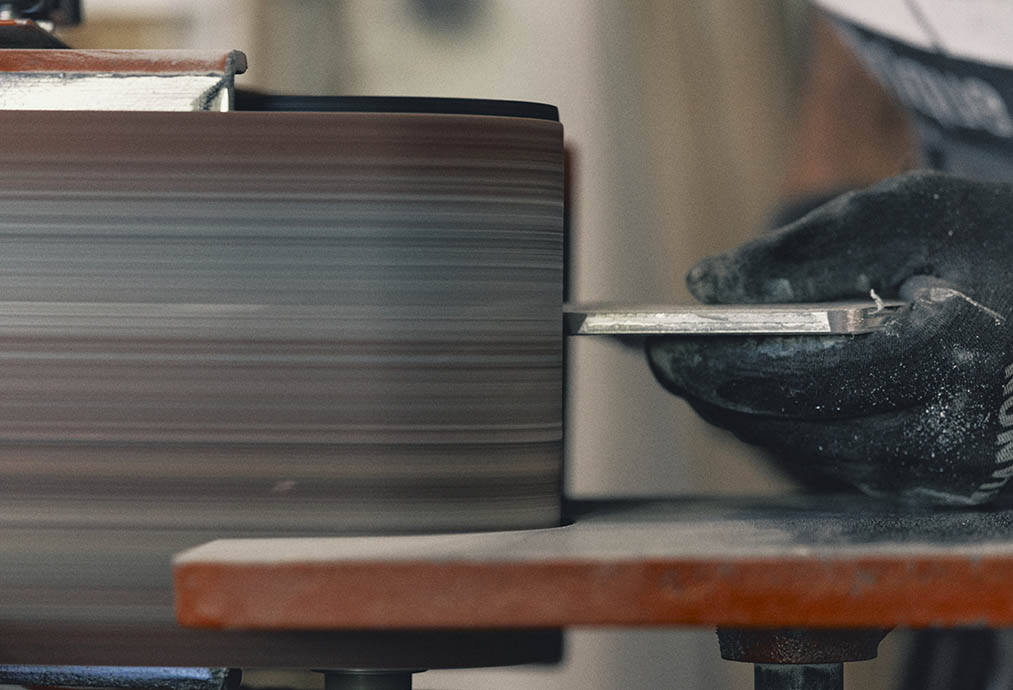
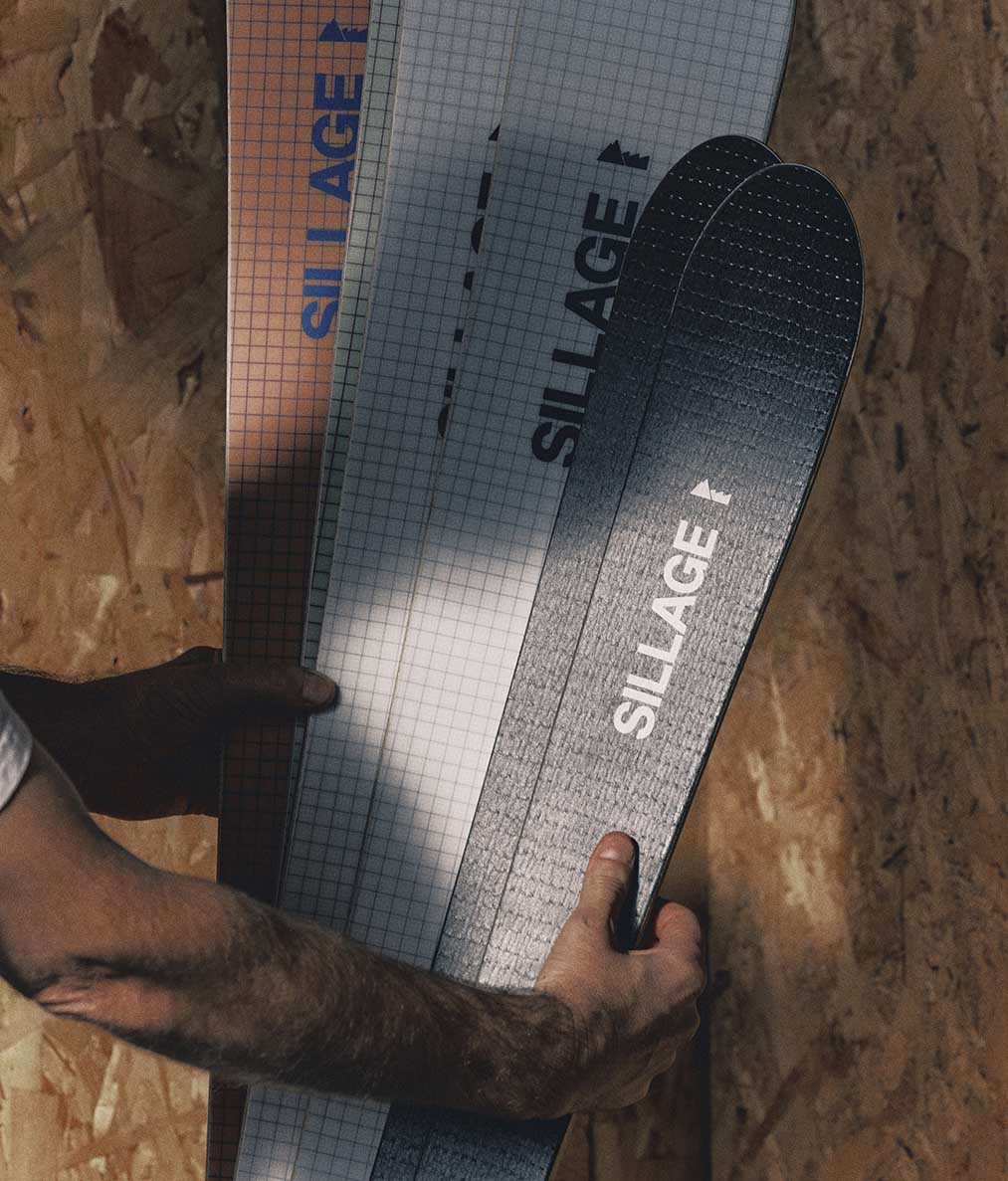
Every pair is made to order, in three weeks, and checked by hand before it leaves.
Tuning, repairs and (Re)Nouveau, our renovation: your skis go back to the workshop that built them.